 No. 4 · For the Soul ·
A man and a watch
Fourteen seconds
In April 1970 three astronauts fired an engine by hand, without a computer, to get back to Earth. Legend says an Omega Speedmaster counted those seconds. We read what the astronauts themselves said in that hour.
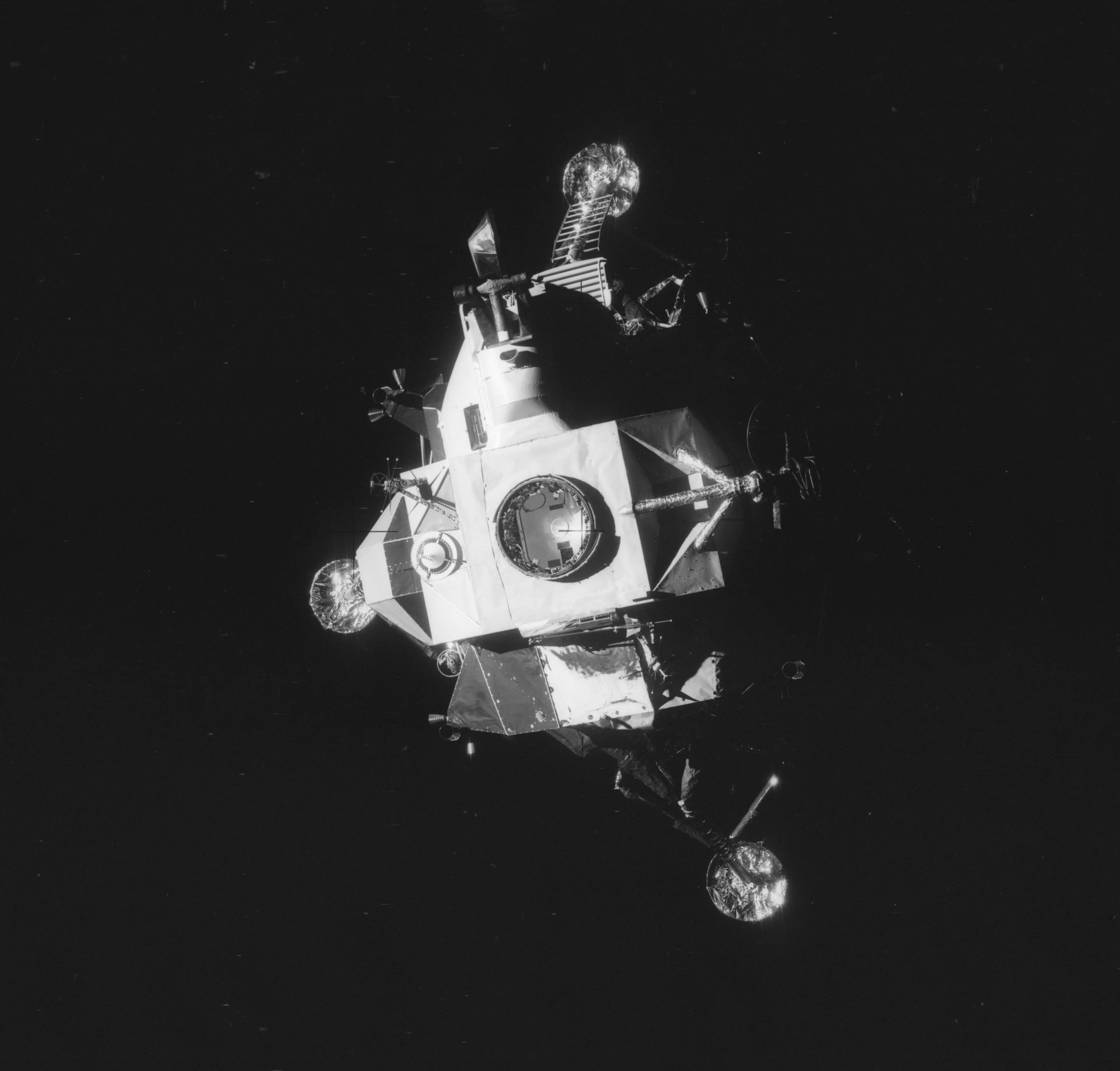
105 hours, 18 minutes
On the night of Thursday 16 April 1970, Greenwich time, the computer of the lunar module Aquarius was switched off. Fred Haise reported to Houston: “Ullage.” Ten seconds later the transcript has “Ignition.”, and fourteen after that, “It shut down.”1
105:17:58HaiseEngine Arm to Descent.
105:18:18HaiseUllage.
105:18:28—Ignition. The thrust looks good.
105:18:42—It shut down.
105:19:46LousmaOkay. Looks good. Nice work.
105:19:51HaiseLet's hope it was.
The time here is not the clock’s but the flight’s: hours, minutes and seconds since launch. NASA’s mission timeline records ignition and cutoff to a tenth of a second: 105:18:28.0 and 105:18:42.0.2 Exactly fourteen seconds.
To understand why the crew started and stopped the engine by hand, we have to go back two days.
“Houston, we've had a problem”
Apollo 13 lifted off on 11 April and flew to the Moon: Jim Lovell as commander, Jack Swigert as command module pilot, Fred Haise as lunar module pilot.2 After 55 hours, 54 minutes and 53 seconds, telemetry dropped out for 1.8 seconds and the crew heard a loud bang – an oxygen tank in the service module had exploded. Sixteen seconds later Swigert reported: “Okay, Houston, we've had a problem here.” Nineteen seconds after that Lovell repeated it.2
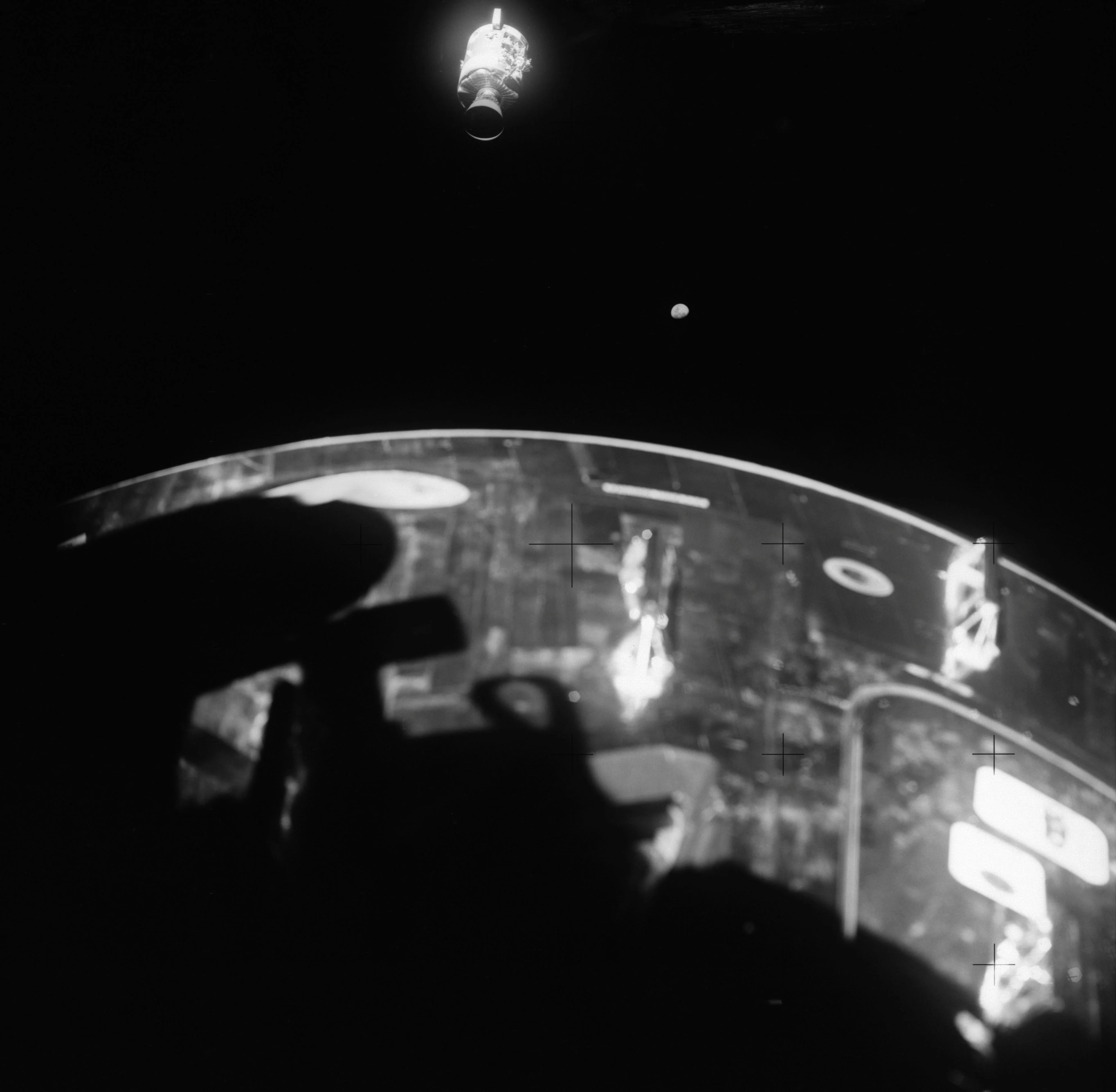
A lifeboat without a computer
The Moon landing was gone. The lunar module Aquarius became a lifeboat for three. To make the power last until Earth, almost everything in it was switched off, the navigation computer included.1
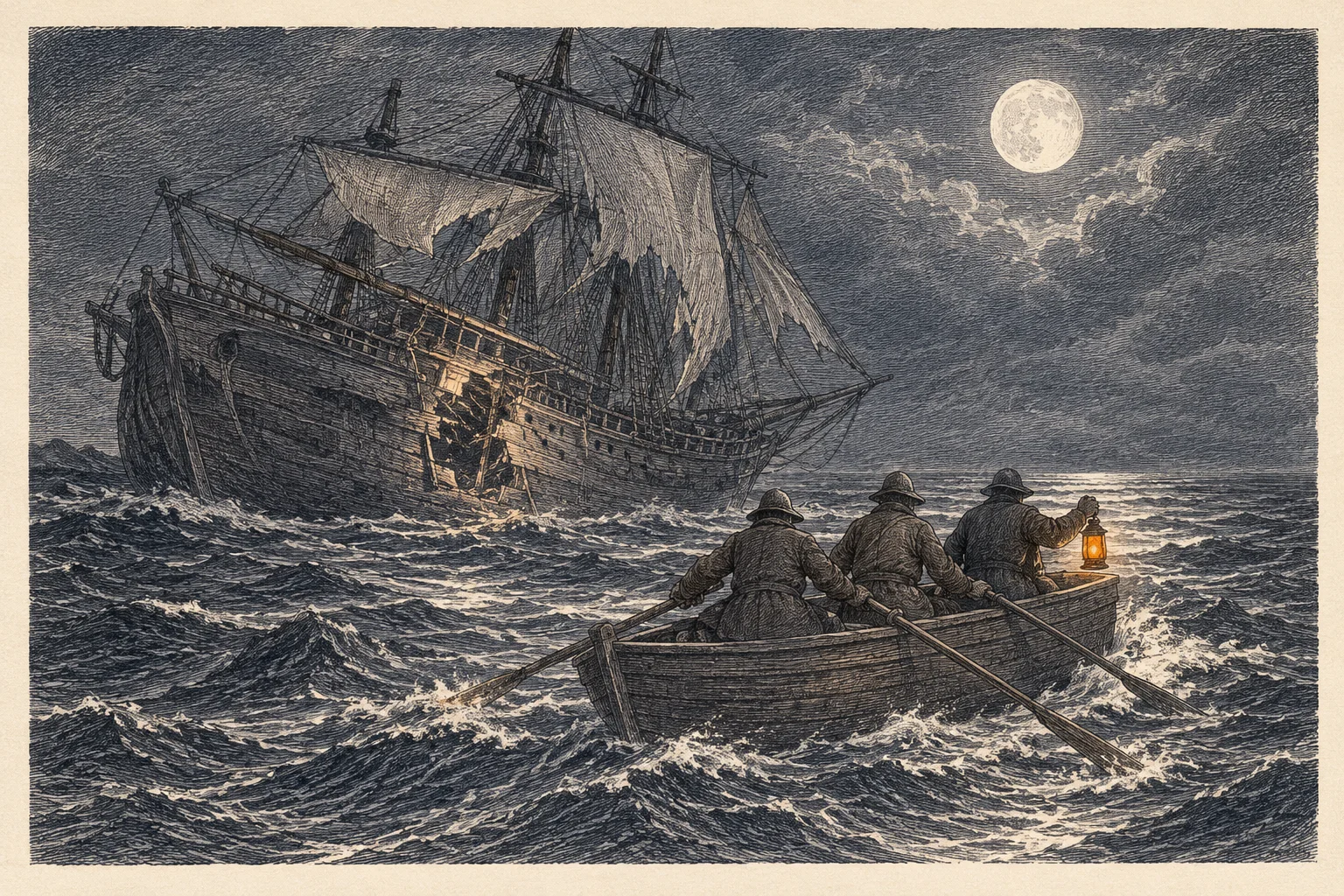
Like a house when the paraffin runs out: every lamp is put out, and one candle is left on the table.
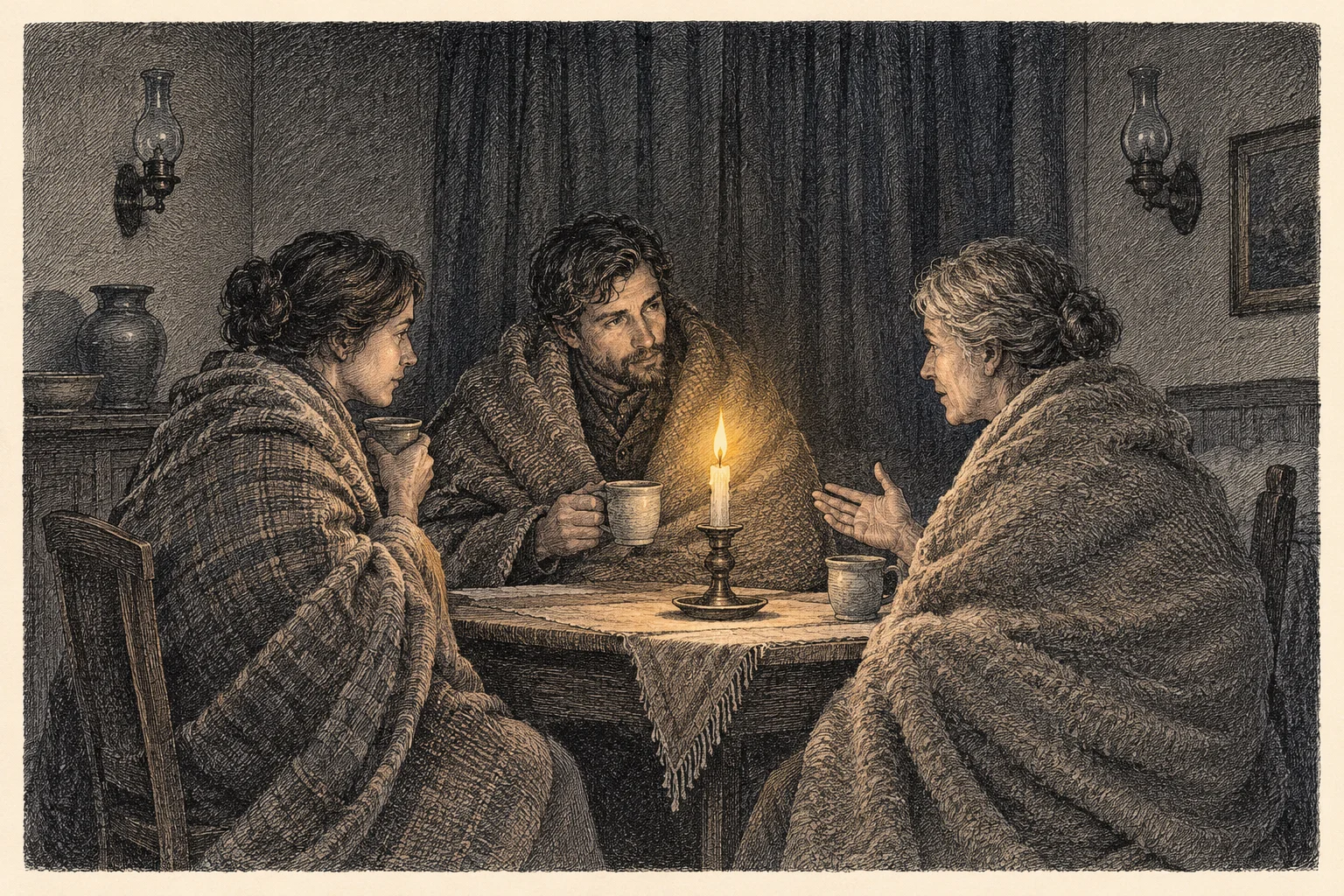
On the fifth day of the flight the trajectory had to be corrected. Its lowest point lay at 87 nautical miles; for the spacecraft to enter the atmosphere it had to be brought down to 19.8.1 Earth was then 285,154 km away.1
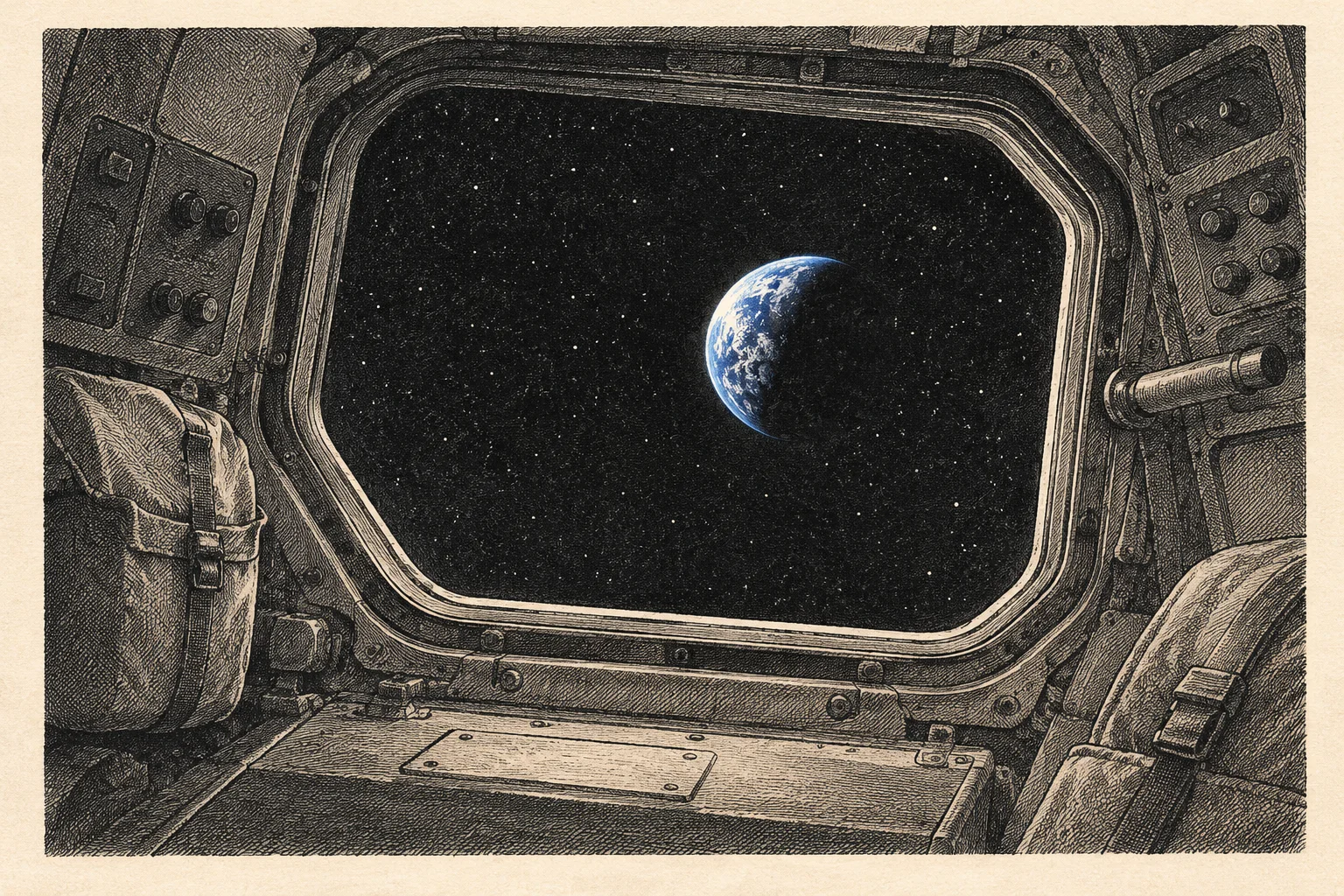
The plan Houston read up to Haise fitted into a few lines. Set the attitude without the computer: look at Earth through the sighting device so that the line between its day and night side lies on the reticle line, with the Sun at the top of the telescope. First, ten seconds on four small thrusters to push the craft so the fuel settles in the tanks. Then light the descent engine and hold it at a tenth of its thrust. Change the velocity by 7.8 feet per second. Planned burn time: 15 seconds, but shut the engine down manually at 14. The only reason to abort: if the craft began to tumble.1
A sailor steering at night without instruments does much the same: he lines up the mast with a distant lighthouse and holds the course. The astronauts’ lighthouse was Earth itself.
“The burn is very insensitive to burn time and attitude.” – Houston, an hour and a half before the burn.1
This line in the transcript takes apart part of the legend. Houston itself said the burn hardly depended on duration or attitude, and could even be postponed. Six minutes before, when Lovell asked whether to count down, Deke Slayton answered: “It's not time critical, Jim.”1 The seconds mattered, but not the tenths.
Fig. 1 · Try it yourself: fourteen seconds
Press “Ignite” and shut the engine down when you think fourteen seconds have passed. The space bar works too.
According to the plan, the engine was to change the velocity by 7.8 feet per second in 15 seconds – about 0.52 feet per second each second on average. We assume constant thrust; a real engine does not start or stop instantly. In reality the burn gave 7.4, and with the small thrusters added, 7.6 feet per second, and Houston was satisfied [1].
Who kept the time
In its history of Apollo 13, Omega writes that all three astronauts had Speedmaster Professional chronographs – since 1965 part of NASA’s official kit on every crewed mission. And one more sentence: “Without digital timers, the Speedmaster played a vital role.”3 Popular retellings go further and say that Swigert counted those fourteen seconds on his Speedmaster.
Legends grow like fishermen’s tales: the hands show an ever bigger fish, while on the scales it stays the same.
The transcript does not say so. In it Haise asks Houston for an exact mark so that he can set the module’s event timer, and at 105:15:59 reports: “we reset our clock”.1 Which watch, on whose wrist, counted the seconds of the burn itself, the transcript does not say. Nor does Omega.3
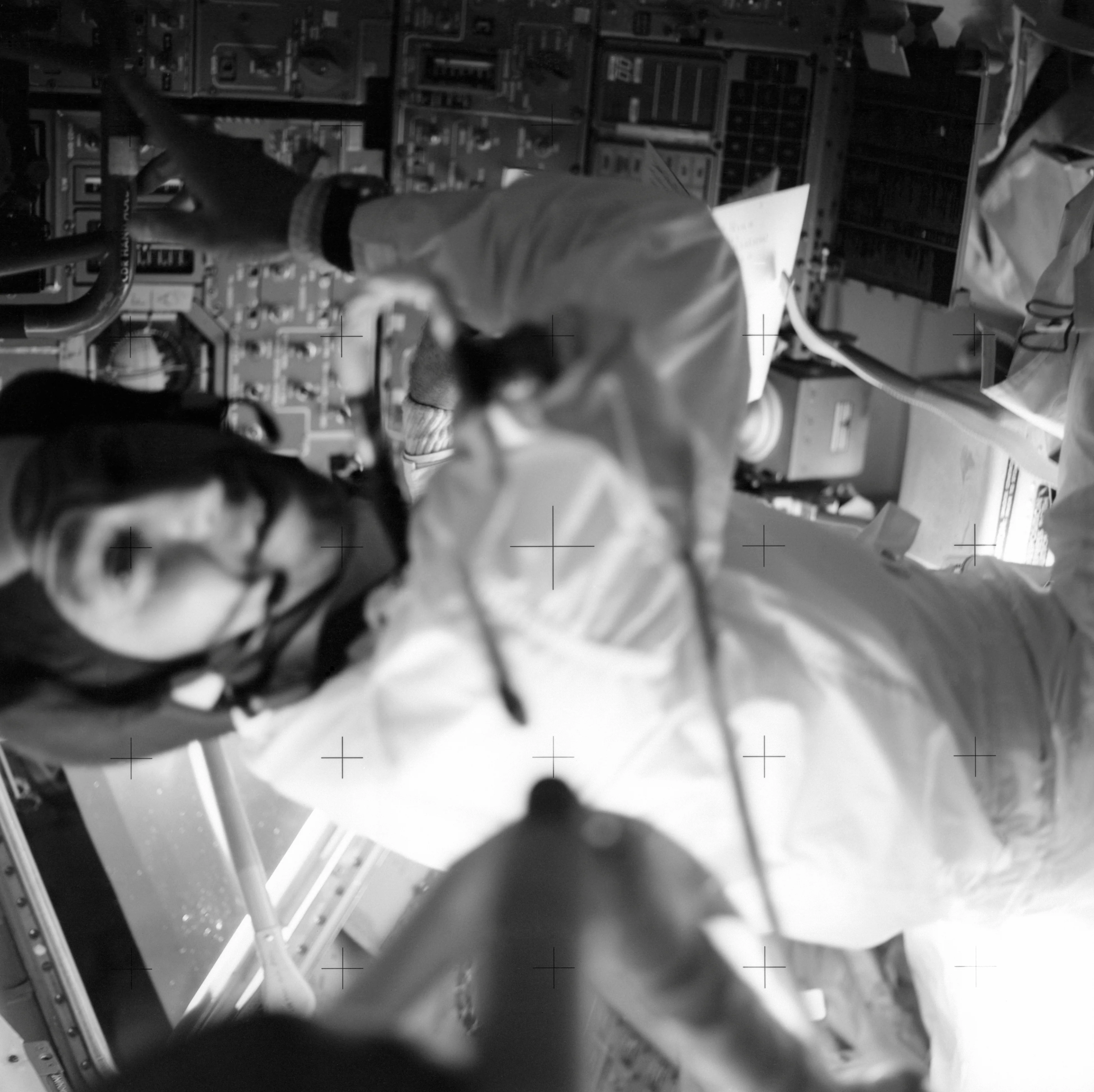
The watches, though, survived. Swigert’s Speedmaster is kept today at the National Air and Space Museum in Washington, as is Haise’s.4 The museum’s entry recalls what NASA demanded of this hand-wound chronograph: water-proof, shock-proof and anti-magnetic, working from 0 to 200 degrees Fahrenheit and withstanding 12 g. It was certified for the Gemini programme in June 1965, and in 1977 NASA transferred all the chronographs to the museum. Swigert’s watch is not on display now.4
of the flight time – that is how long the burn still talked about today lasted: 14 seconds out of 142 hours, 54 minutes and 41 seconds.
How we know: the start and end of the burn and the time of splashdown – NASA’s mission timeline [2]; 14 ÷ 514,481 s.
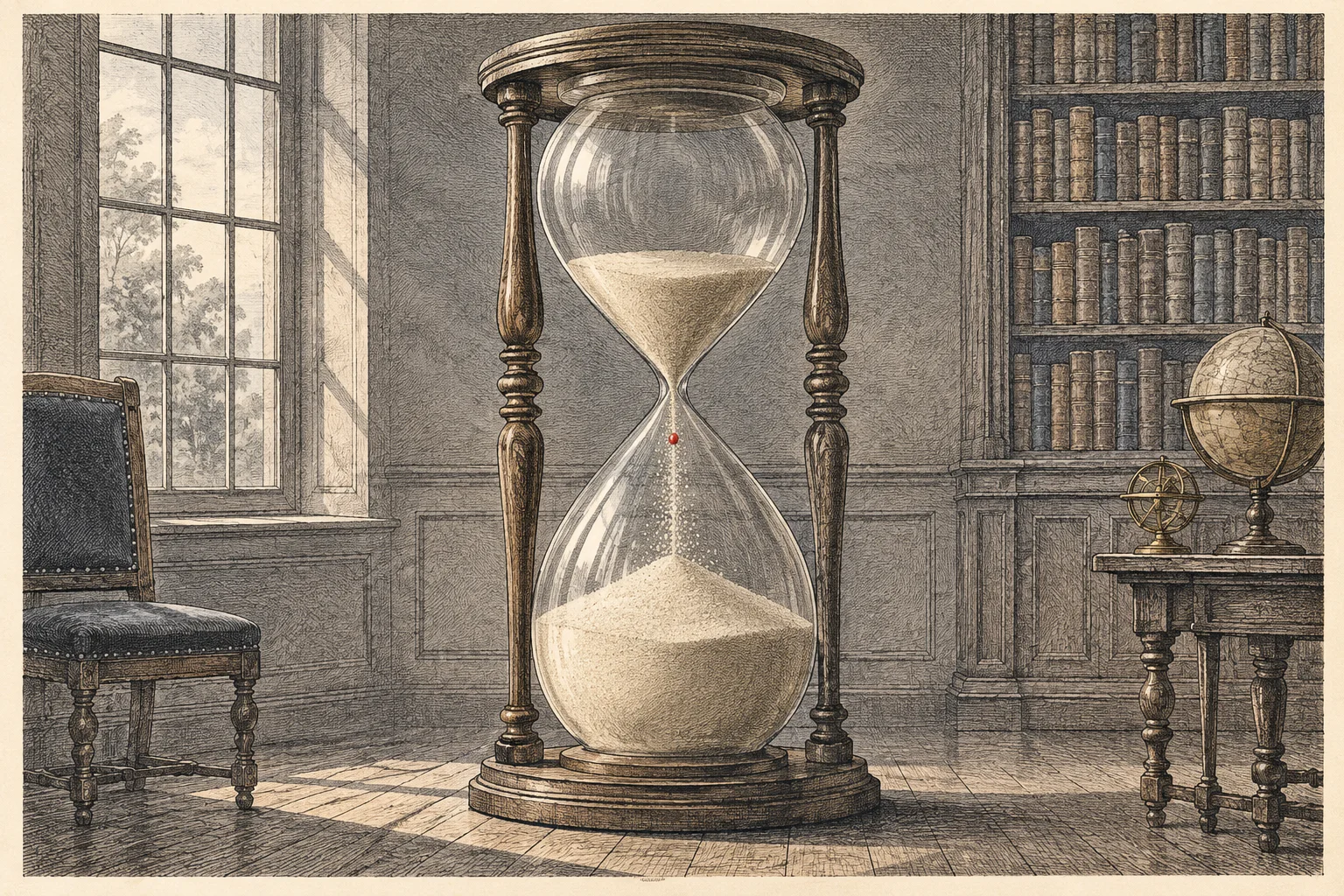
Fourteen seconds out of almost six days – like one grain in a huge hourglass.
Snoopy with the stars
On 5 October 1970 Omega received the NASA astronauts’ Silver Snoopy award.5 Three men signed the certificate: Lovell, Swigert and Haise. But read it carefully: there is no Apollo 13 in it and no fourteen seconds. Omega is thanked “for dedication, professionalism and outstanding contributions in support of the first United States Manned Lunar Landing Project Apollo”.5
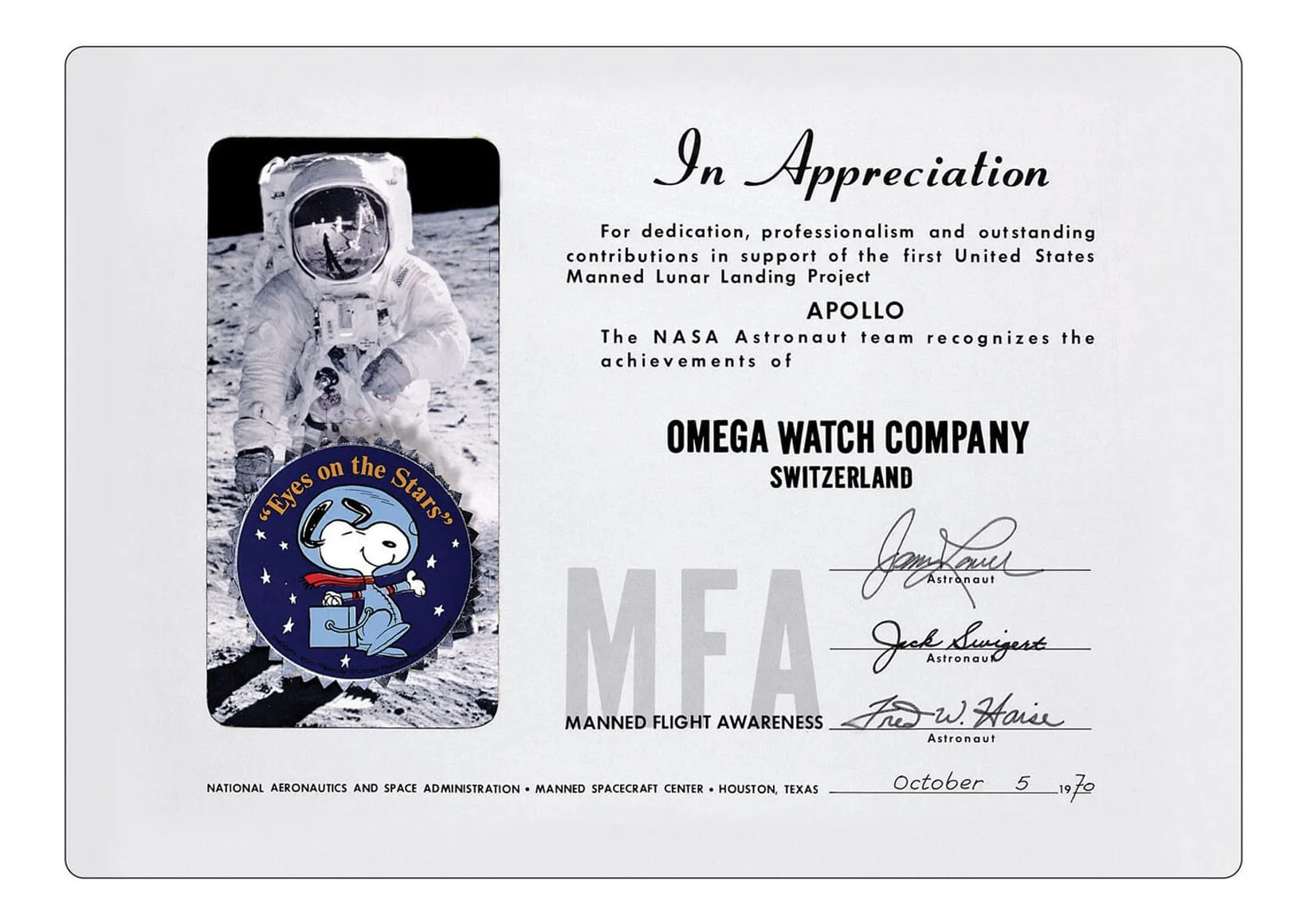
Fig. 2 · The whole flight on one scale
000:00:00Launch, 11 April, 19:13 GMT.
055:54:53Explosion in the service module, 14 April.
105:18:28Manual correction with the descent engine, 14 s.
137:39:51Last correction with the small thrusters, 21.5 s.
138:01:48Service module separated.
141:30:00Aquarius separated.
142:54:41Splashdown in the Pacific Ocean, 17 April.
All marks follow NASA’s timeline [2]; the scale is linear. The fourteen seconds would take up 0.0027 % of this bar – less than one screen pixel – so only a mark is shown.
The end
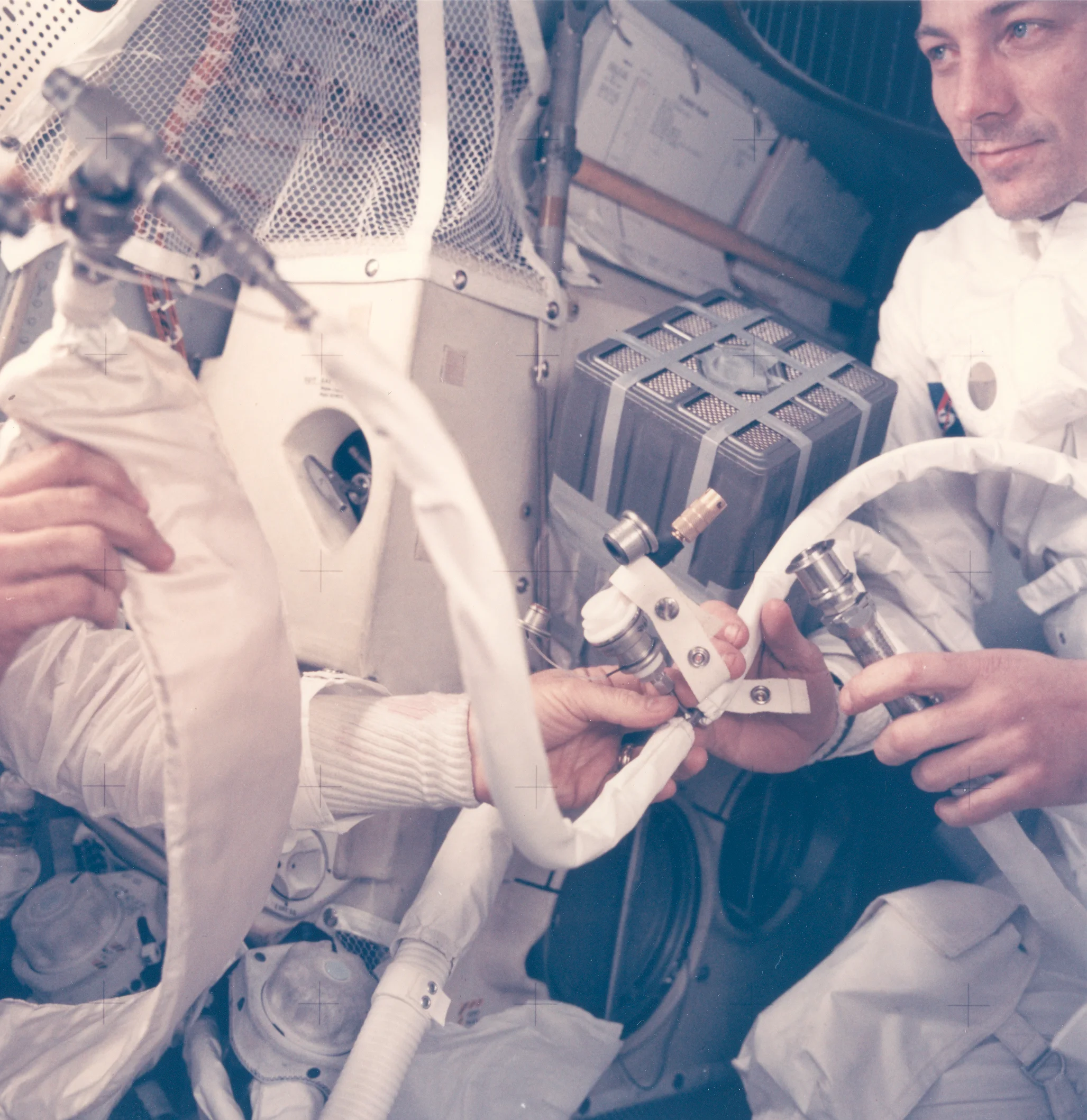
Twenty-four minutes after the burn Haise looked out at the Moon: “Well, there's the old terminator at Fra Mauro. We'd been landing about 2 hours ago.” He was right – the landing had been planned for 103:42:02.1
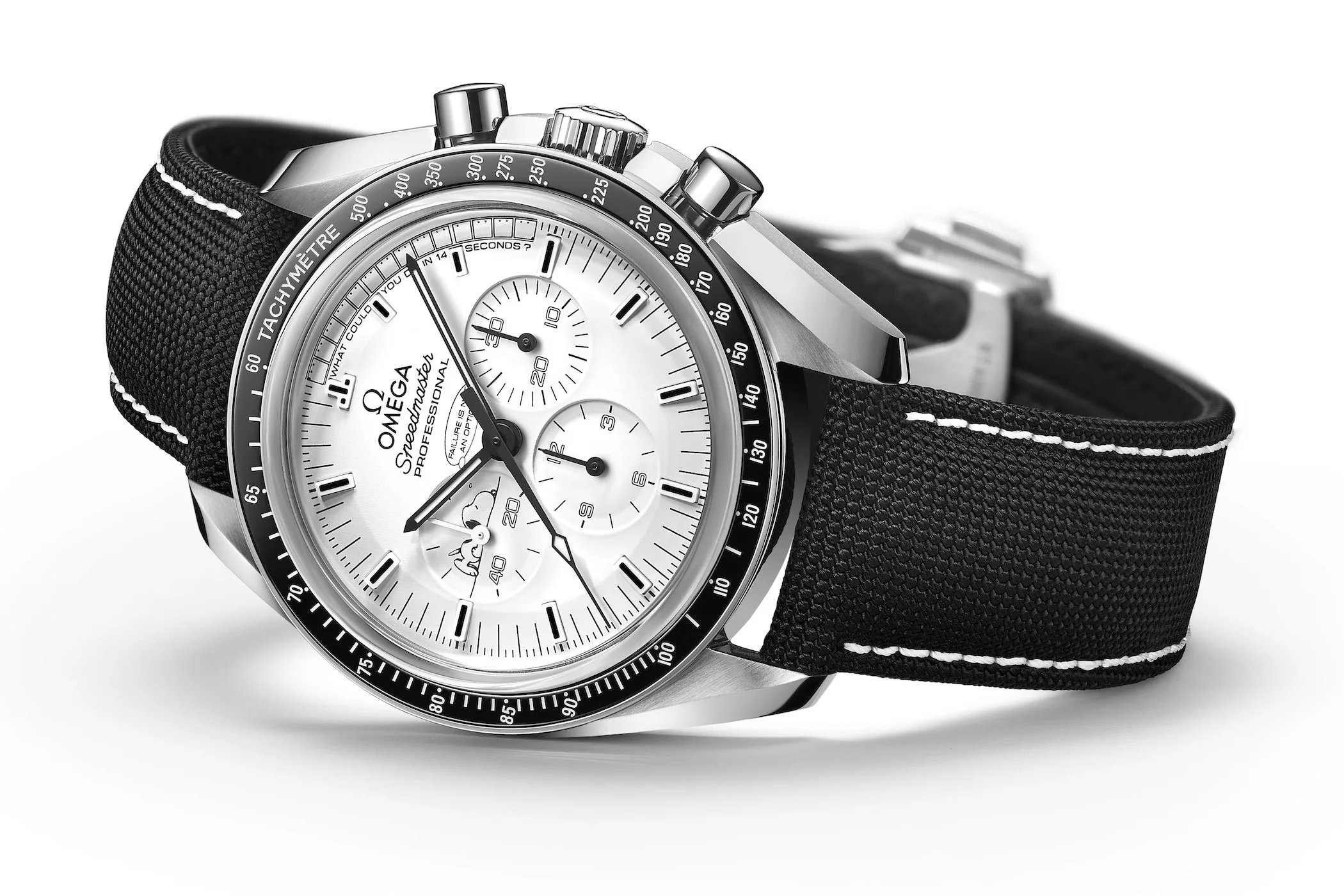
On 17 April, 142 hours, 54 minutes and 41 seconds after launch, the command module splashed down in the Pacific Ocean.2 In 2015 Omega released 1,970 Speedmaster Apollo 13 Silver Snoopy Award watches. Each carries a fourteen-second scale and a question: “What could you do in 14 seconds?”5
Sources
1. Apollo 13 Flight Journal, “Day 5, part 3: The Manual Course Correction Burn” – NASA transcript with commentary by W. D. Woods, J. Kemppanen, A. Turhanov and L. J. Waugh (2025). The burn plan, references, “not time critical”, setting the timer, the result, Fra Mauro.
2. NASA SP-4029: Apollo 13 Timeline. Launch, explosion and calls, start and end of the burns, module separations, splashdown.
3. Omega, “OMEGA and Apollo 13: 50 years later”. The Speedmaster Professional as NASA equipment since 1965, the 14-second burn, “Without digital timers…”.
4. Smithsonian National Air and Space Museum: Swigert’s chronograph and Haise’s chronograph. NASA requirements, 1965 certification, transfer to the museum in 1977.
5. Monochrome Watches, “How Snoopy ended up on the Omega Speedmaster”, 5 October 2020, and the image of the Silver Snoopy certificate published there. The date of the award, the 2015 edition.
How we checked
The main sources are the NASA transcript [1] and timeline [2]; we compared Omega’s text [3] and the museum entry [4] with them. We read the certificate’s wording on the document itself.
- start of the burn: 105:18:28 in the timeline, while that same night “Apollo Control” announced 105:18:32 and a total duration with the trim of 15.4 s; we use the timeline figures;
- that Swigert kept the time, and with a Speedmaster, is said only by secondary retellings – so that is how we present it, as legend;
- the transcript lines “Ignition” and “It shut down” have no speaker – we do not assign a name;
- we found no reliable primary source for which references the crew wore in flight – we do not name them.