 No. 2 · For the Soul ·
One object
A watch for a queen who never saw it
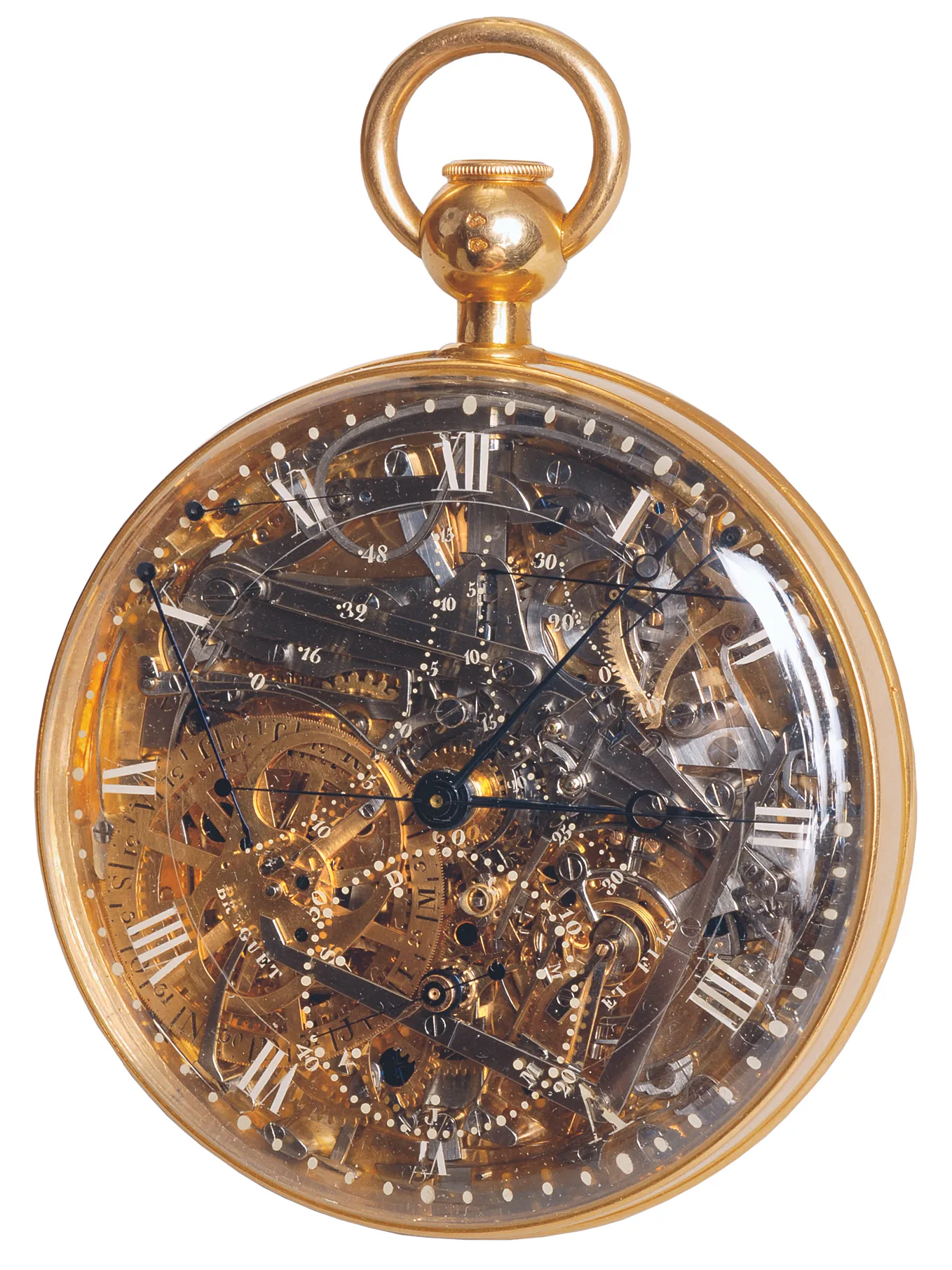
In 1783 someone ordered a Breguet watch with no limits at all – neither of time nor of price. It was finished 44 years later, when neither the queen nor the master himself was alive. Then it was stolen, and for 23 years nobody knew where it was.
Empty cases
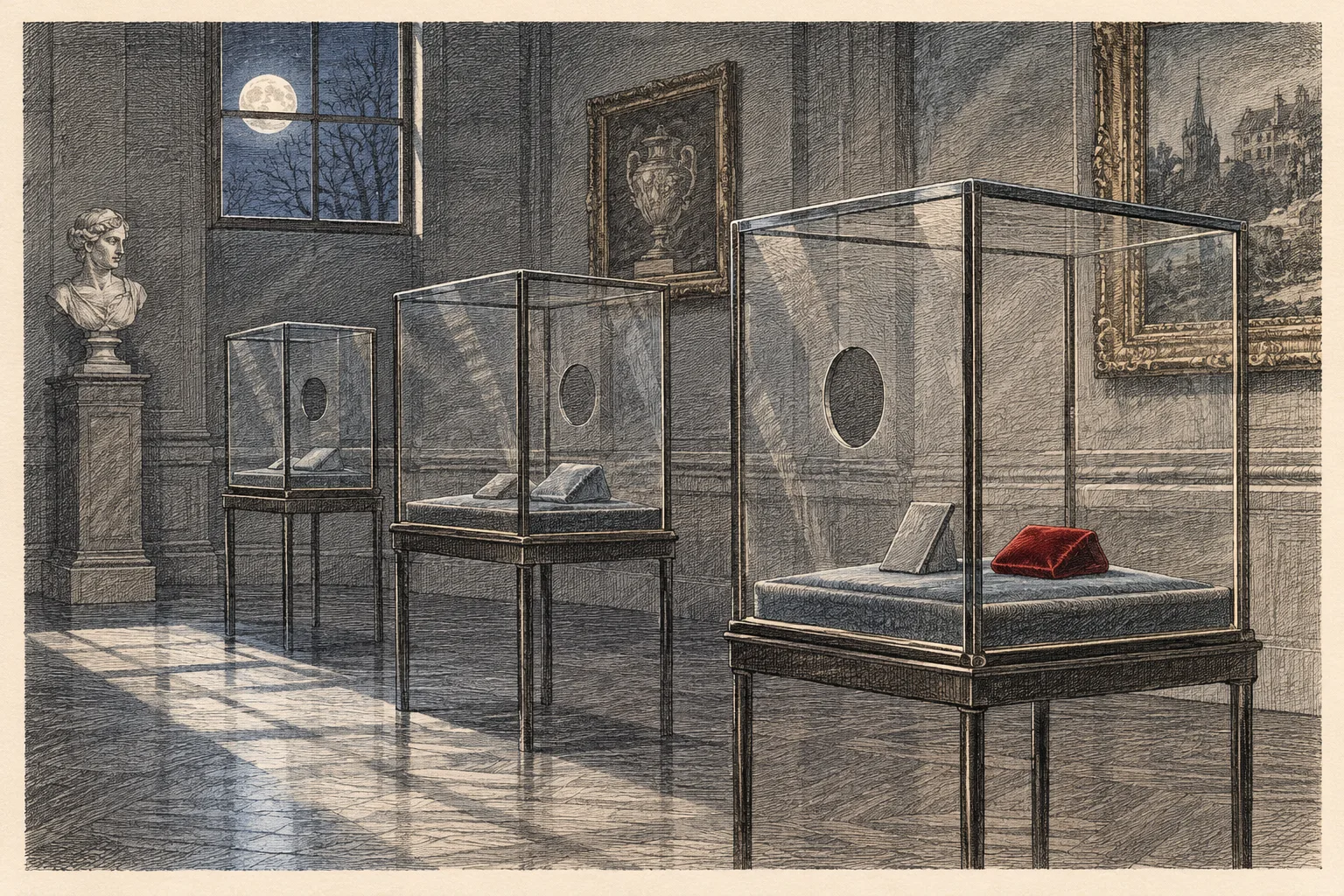
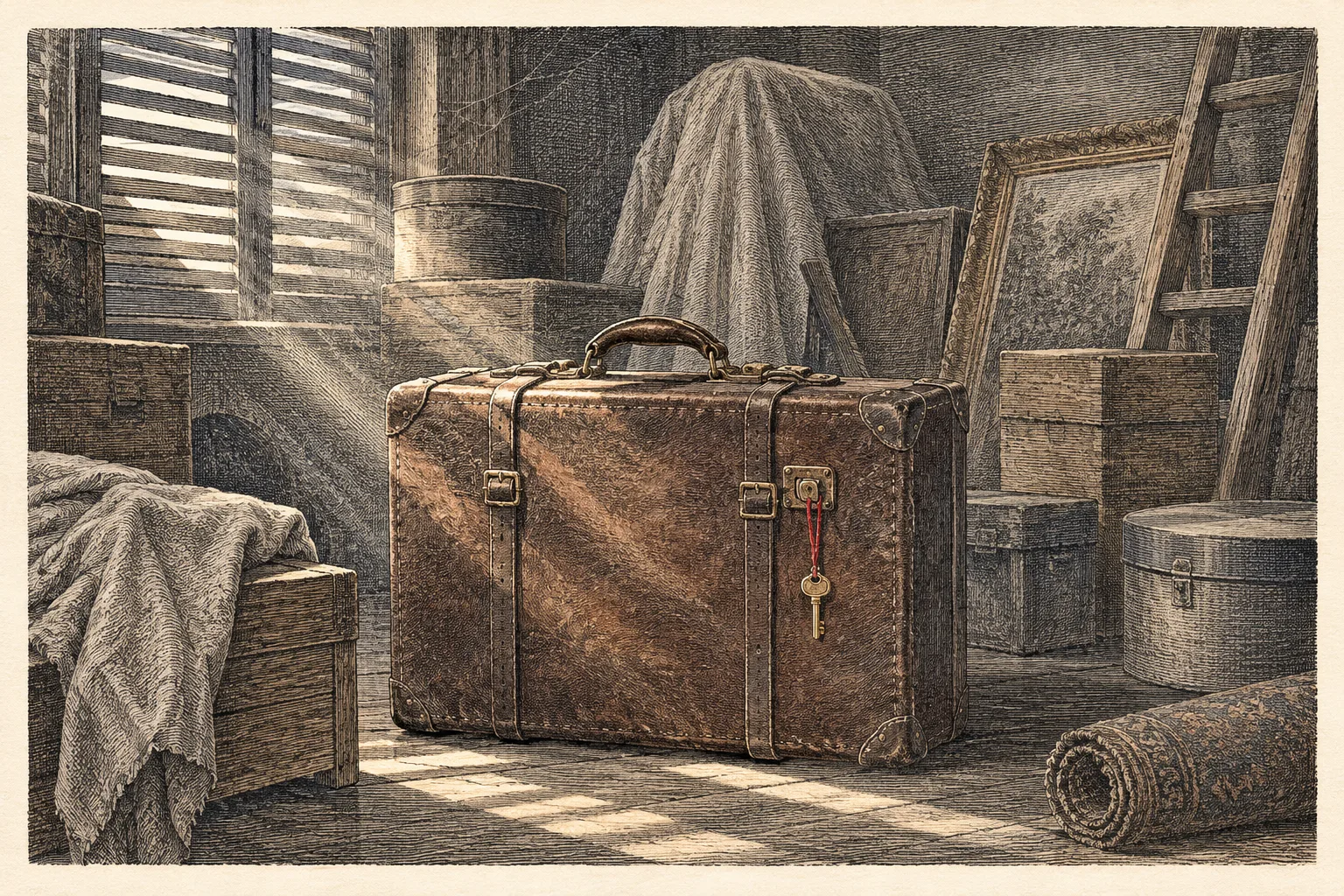
On a Saturday in April 1983 there were no visitors at the L. A. Mayer Museum in Jerusalem.1 At night a thief climbed in through a narrow window, cut holes in the display cases and carried off about a hundred watches, as well as paintings and books.4 Among them was a pocket watch with the number 160.
To understand what disappeared that night, we have to go back two centuries.
An order without limits
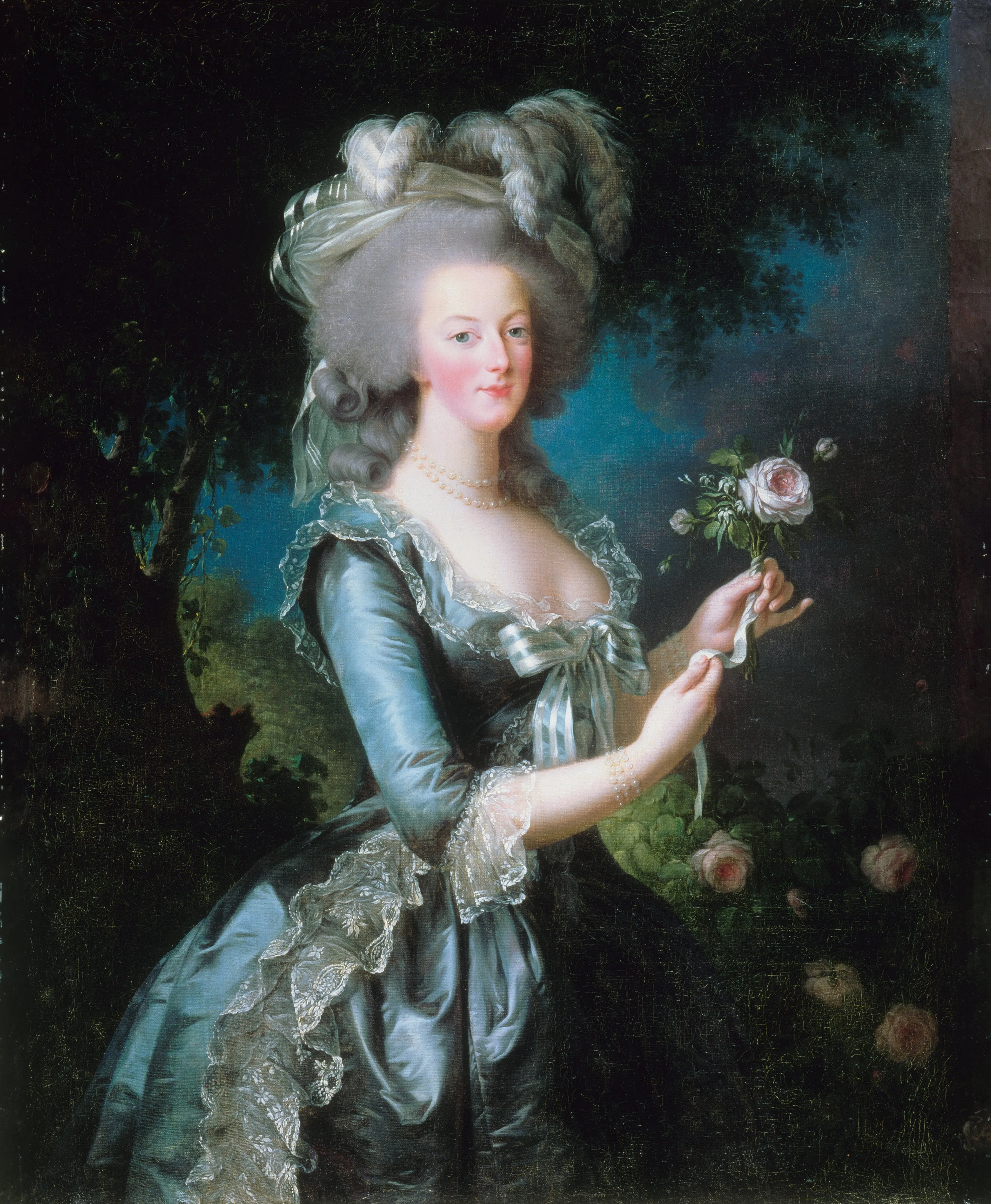
Around 1783 Abraham-Louis Breguet received an order: a watch for the Queen of France, Marie Antoinette. Who placed it is still unknown. An oral tradition, written down only at the end of the 19th century, says it was an officer of the queen’s guard.1 Others suggest the Swedish count Axel von Fersen.4 There is no proof for either.
The conditions survive. The watch was to have as many complications as could be made at the time, and gold instead of other metals wherever possible. There was no limit on time or price.2, 4
It did indeed need time. The queen never received the watch: she was beheaded on 16 October 1793.4
Forty-four years
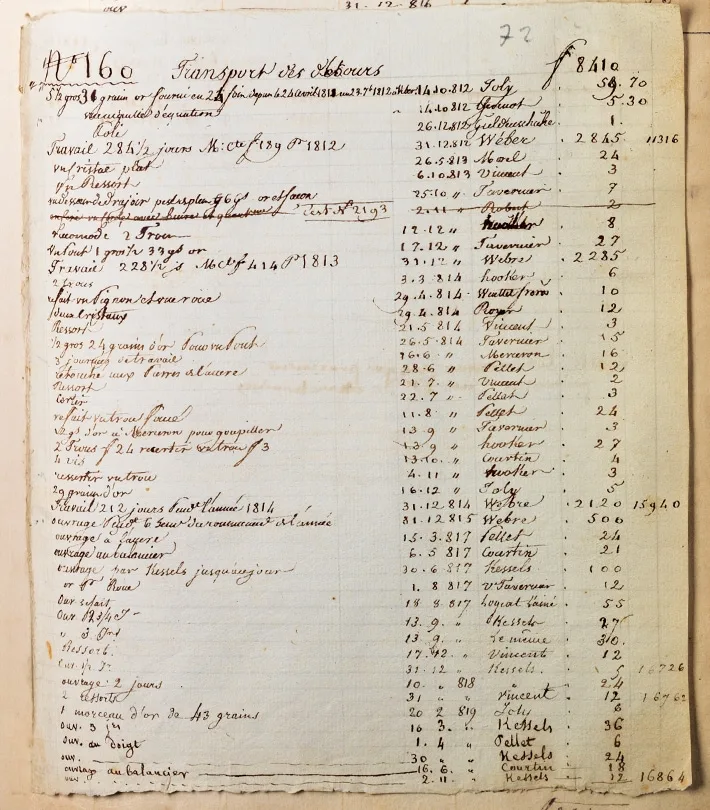
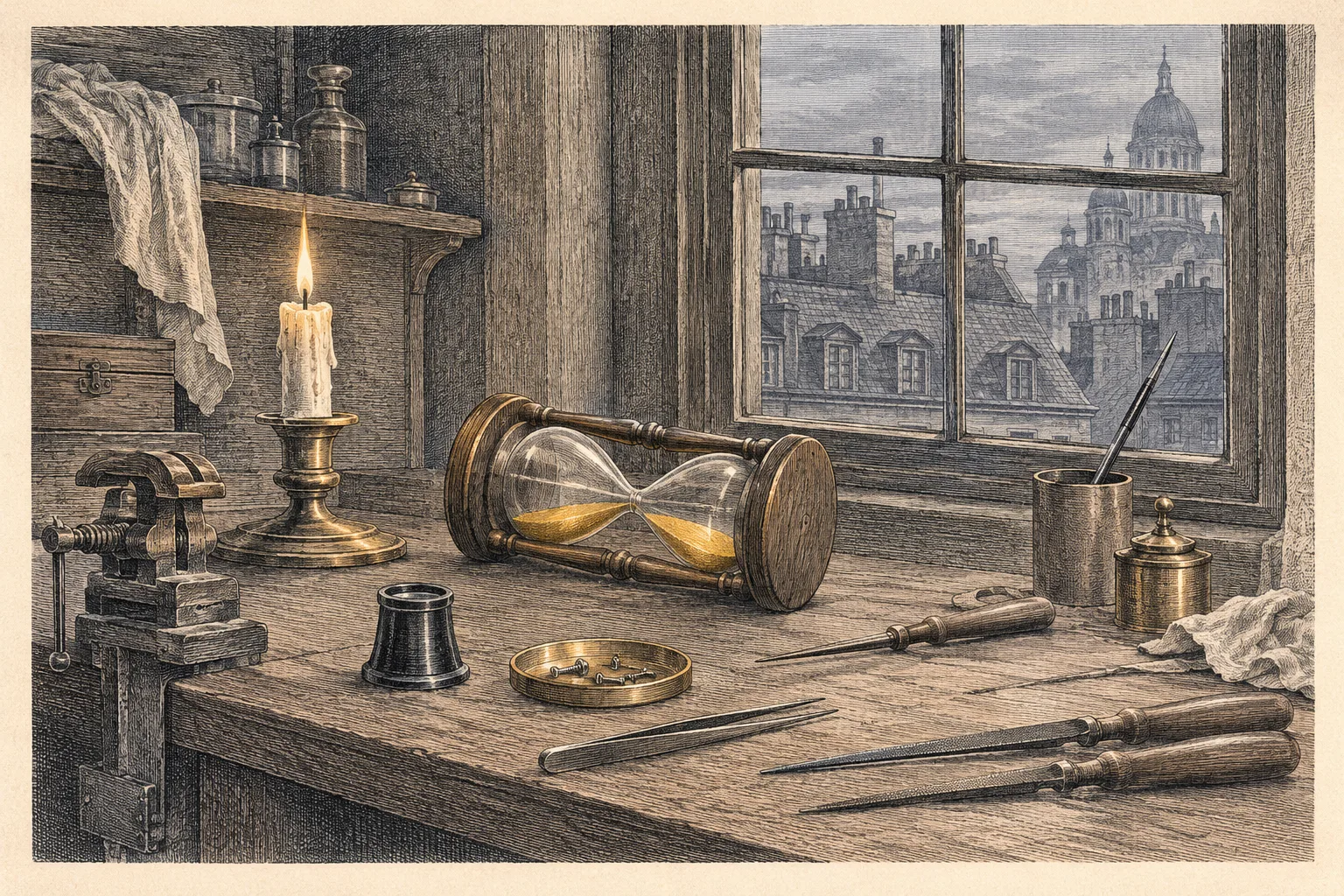
Work on No. 160 reappears in the workshop books in 1809. They show how many days were given to it: in 1812 – 284 and a half, in 1813 – 228 and a half, in 1814 – 212.1 Then a long break, until August 1823. In September 1823 Breguet died, and he spent his last month on the finishing of this watch.1
His son Antoine-Louis Breguet finished it in 1827 – 44 years after the order, 34 years after the queen’s death.2, 3 About twenty craftsmen worked on the watch, among them Michel Weber; the labour alone cost 17,000 gold francs.1
Fig. · Working days on No. 160 according to the workshop books
| Year | Working days | Days in the year |
|---|---|---|
| 1812 | 284½ | 366 |
| 1813 | 228½ | 365 |
| 1814 | 212 | 365 |
Each square is one day. The books do not say which days they were, so the squares are filled in order. 1812 was a leap year.
What it can do
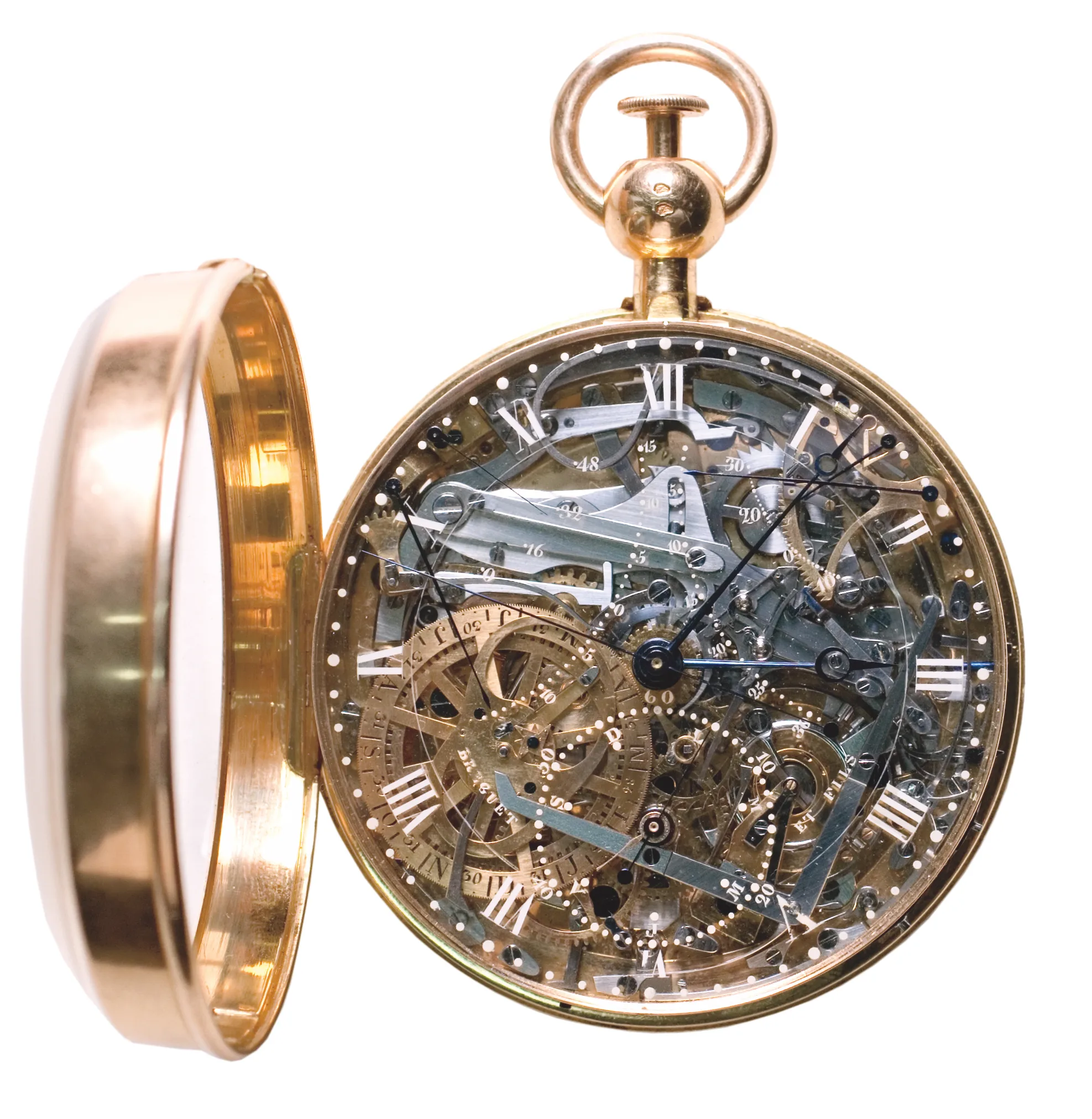
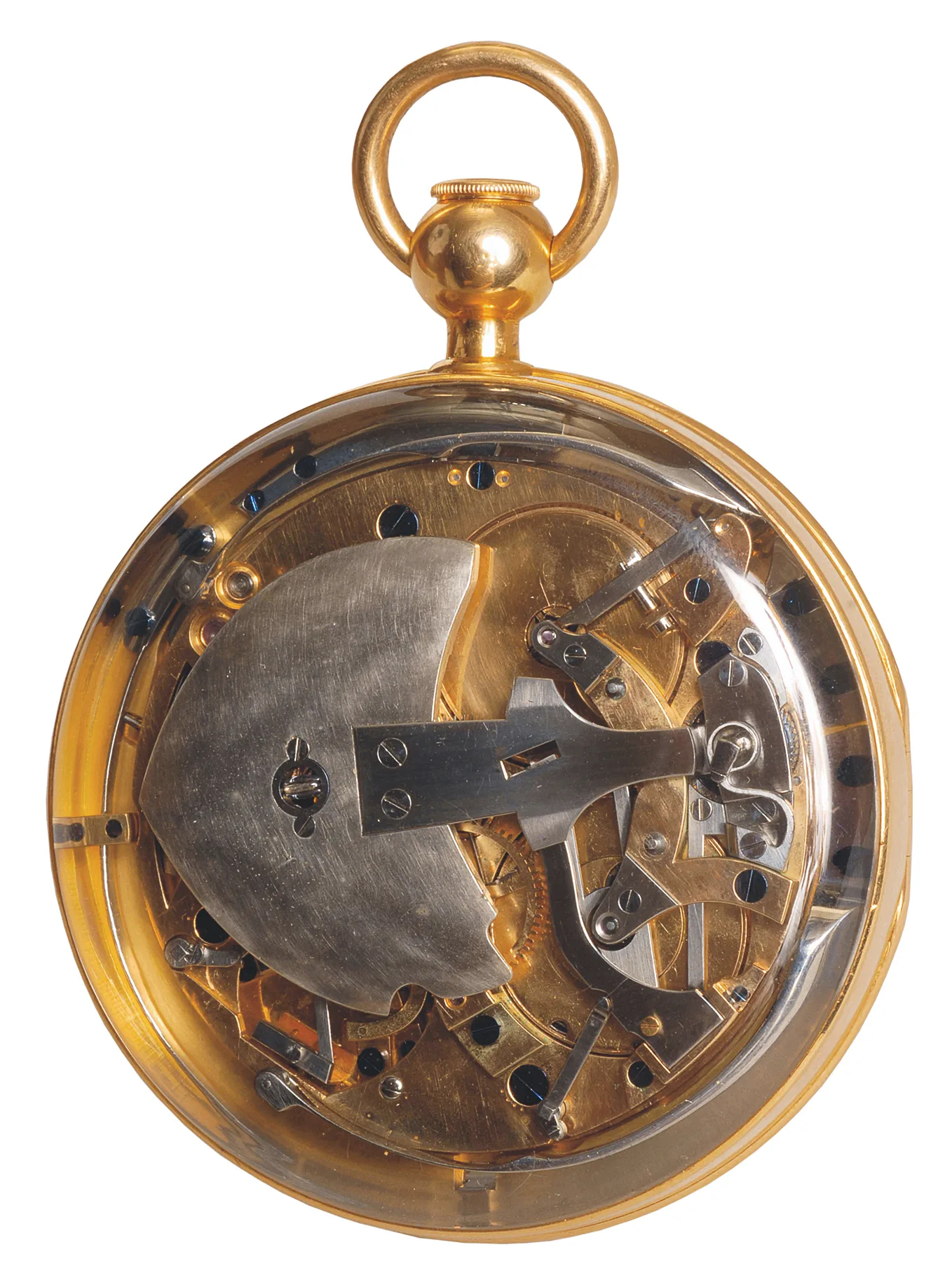
The watch has two dials: one of white enamel, the other of rock crystal.1 Through the crystal you can see everything inside.
Inside is everything a late-18th-century watchmaker could put into a pocket:1, 4
- self-winding (perpétuelle): a platinum weight winds the spring as the watch moves in the pocket;
- minute repeater: at a push it strikes the hours, quarters and minutes – the time can be heard in the dark;
- a full perpetual calendar: day, date, month, leap years;
- the equation of time: how far “true” solar time differs that day from the time on the watch;
- a power reserve indicator – 48 hours;
- a metal thermometer;
- a large independently stoppable seconds hand and a small seconds;
- a lever escapement, a gold hairspring with a Breguet overcoil, every friction point in sapphire, a double “pare-chute” to soften shocks.
How the lever escapement works – see No. 1.
From hand to hand
After 1827 the watch turns up in one pair of hands after another – sometimes in a single line of a document:
- 183811 March – in the Breguet repair book: brought in by the Marquis de La Groye of Provins.1
- 1887Sir Spencer Brunton.1, 4
- 1901Murray Marks.4
- 1904Louis Desoutter.4
- 1917Sir David Lionel Salomons, engineer and collector of Breguet watches. In 1923, for the exhibition marking the centenary of Breguet’s death in Paris, he lent about 110 watches.1, 4
- 1925Salomons dies; his daughter Vera Bryce Salomons inherits the watch.1, 4
- 1974In Jerusalem Vera founds a museum named after her professor, Leo Aryeh Mayer, and gives it her collections. No. 160 is among them.1, 4
Nine years later the museum wakes up to empty cases.
Twenty-three years of silence
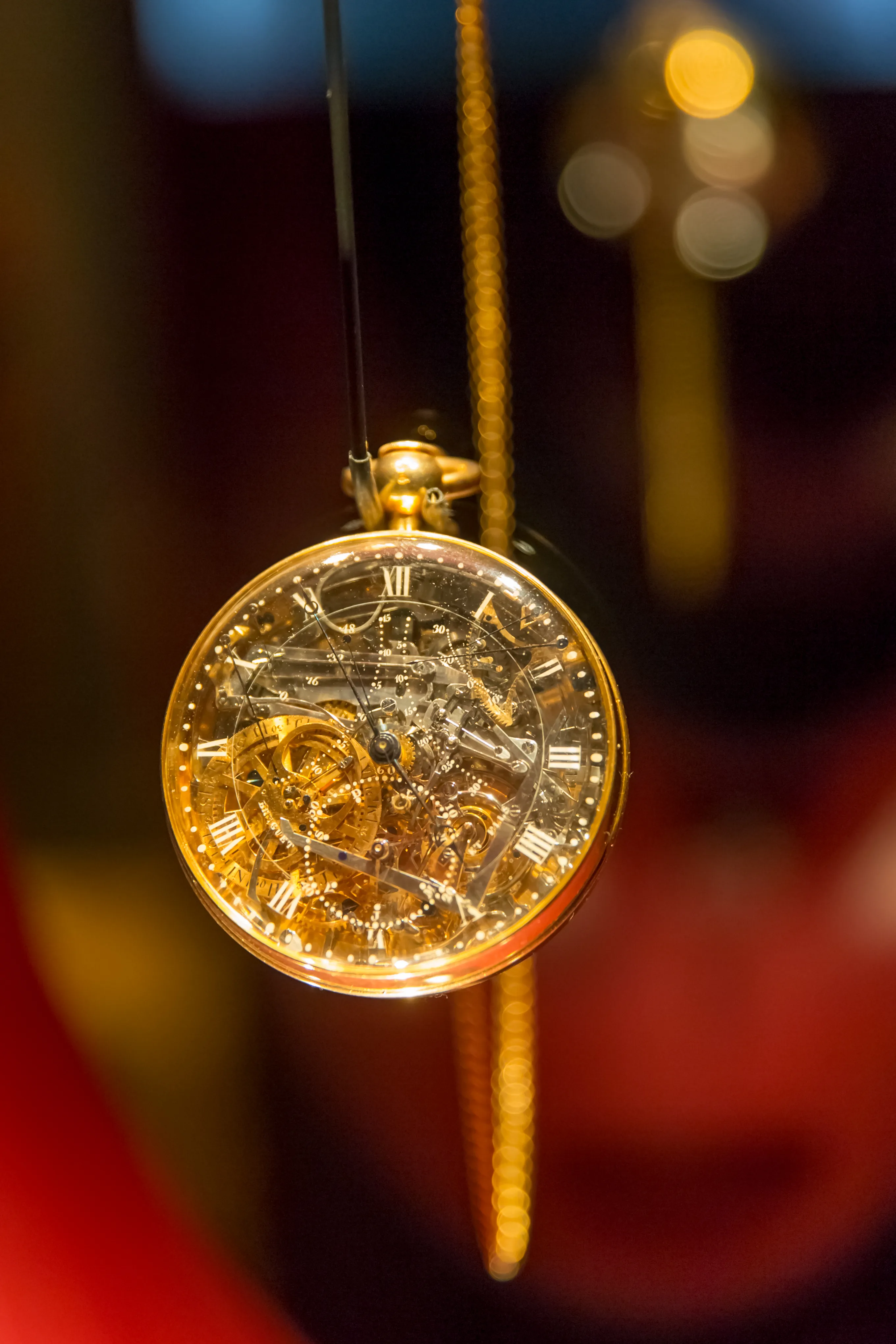
The thief was Na’aman Diller. He died in 2004.1 In 2006 a lawyer called the museum.4 On 14 November 2007 it was announced that the collection had been found, and that the thief’s widow, Nili Shamrat, had helped return it.1
A copy from drawings
While nobody had seen the original, Breguet began to make it anew. Nicolas G. Hayek, owner of Breguet since 1999,1 asked his watchmakers to build an exact copy of No. 160. They did not have the original – only drawings from the Breguet museum archive, material from the Musée des Arts et Métiers in Paris and a few old photographs; they also compared it with another complicated Breguet watch made for the Duke of Praslin.2, 3, 4
The copy received the number 1160: 823 parts and a 63 mm yellow-gold case whose alloy was chosen to give the same coppery tint as in the 19th century.3 It was presented in Basel in April 2008.3
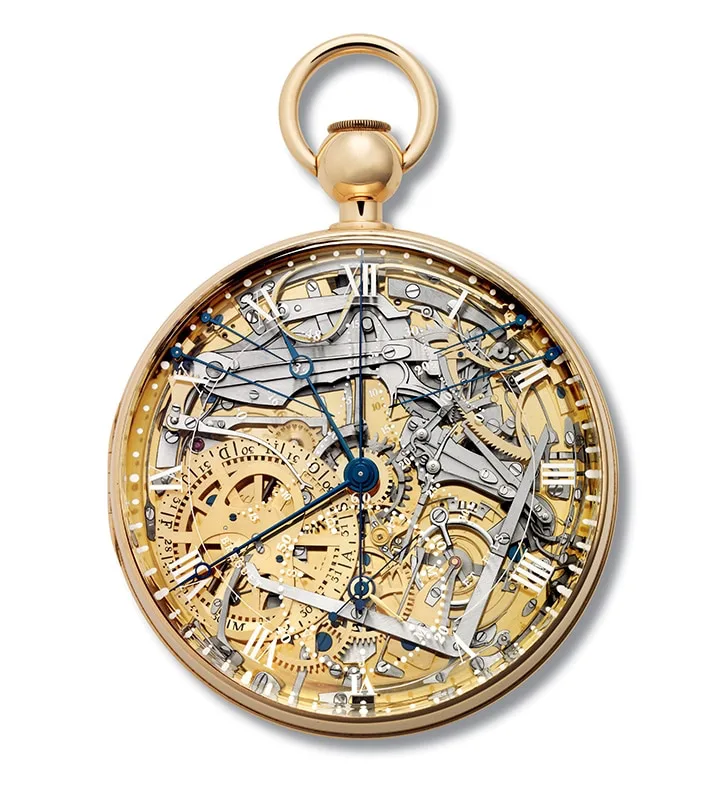
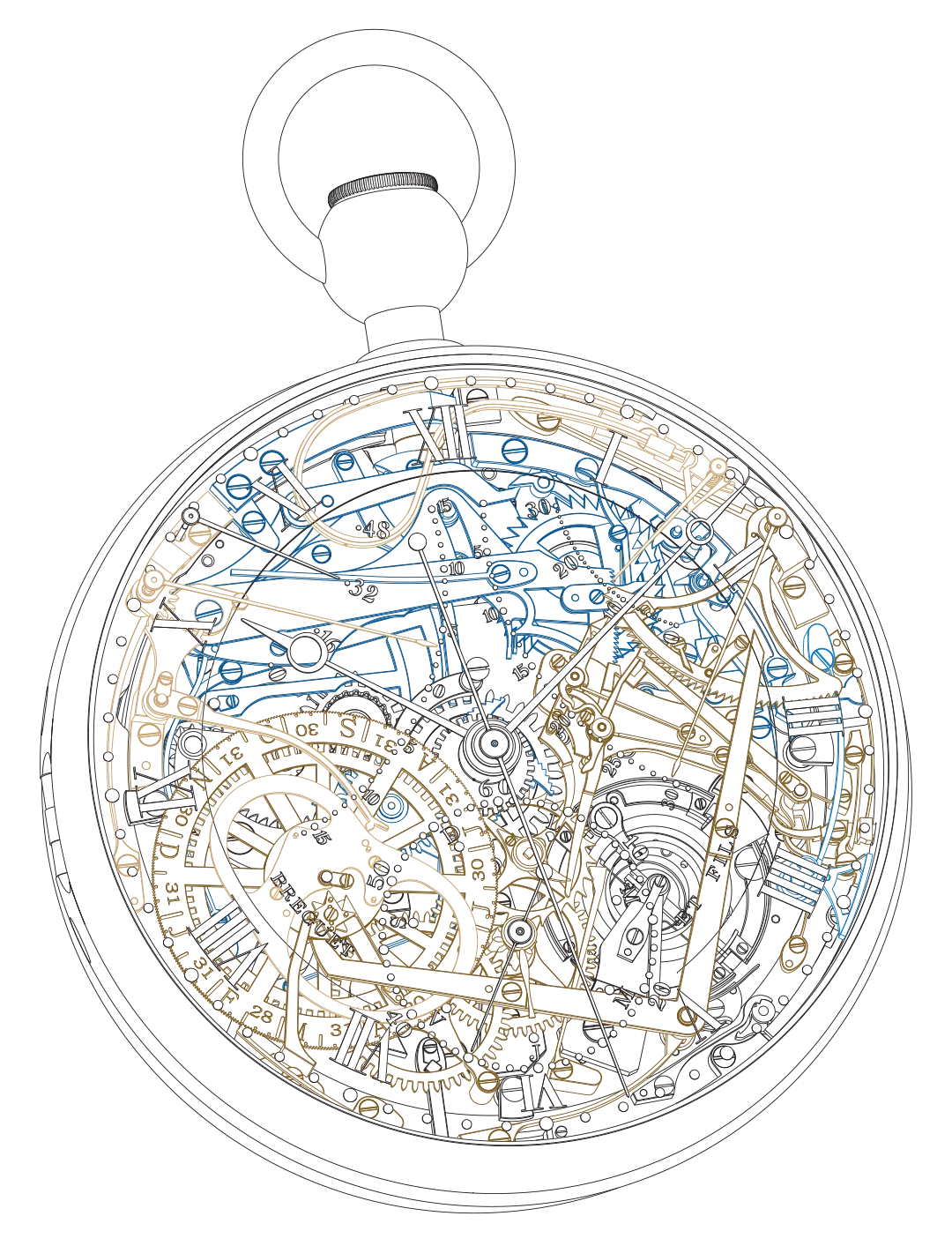
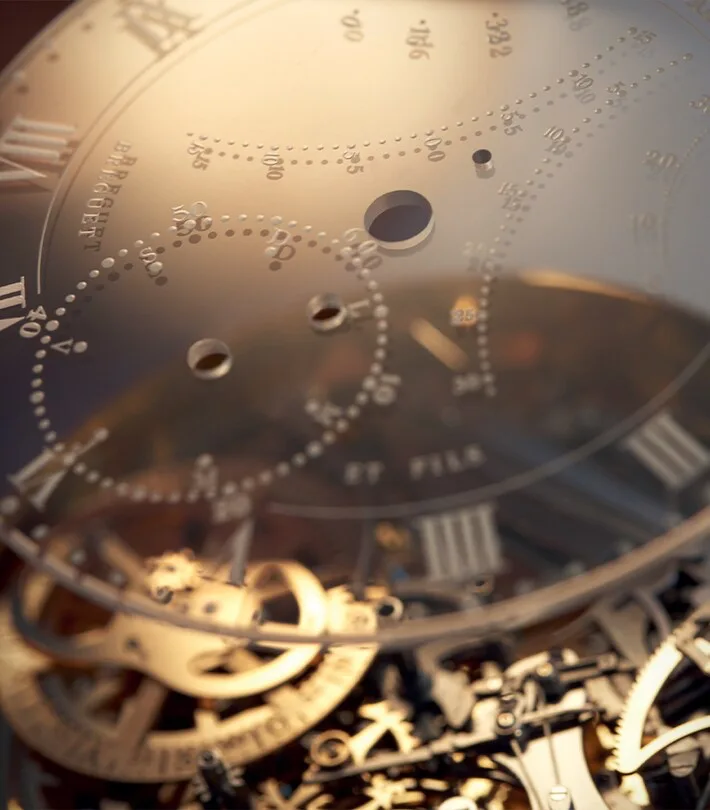
The original turned up just as the copy was nearly finished.
How we know: the recovery of the collection was announced on 14 November 2007 (Breguet), the copy was presented in Basel in April 2008; the Swatch Group press release says the original reappeared when the copy was almost finished.
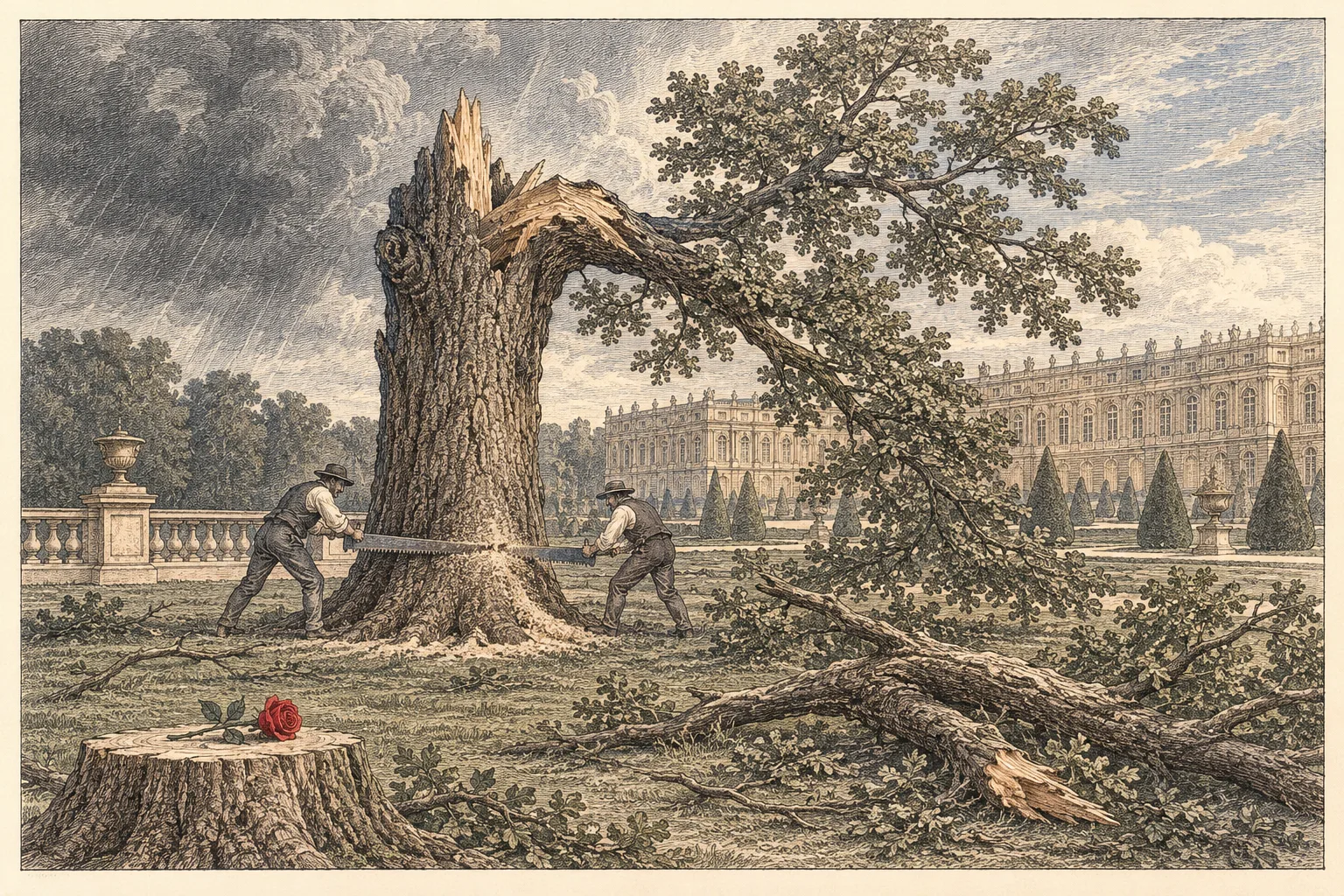
The case for the copy was made from the oak under which the queen liked to rest at Versailles. After a long drought and a violent storm the tree had to be felled, and Versailles gave the wood to Breguet2 – in return Breguet undertook to restore the queen’s estate at Versailles.3 The case consists of more than 3,500 parts; its marquetry – more than a thousand pieces of wood – shows Marie Antoinette’s hand holding a rose.3
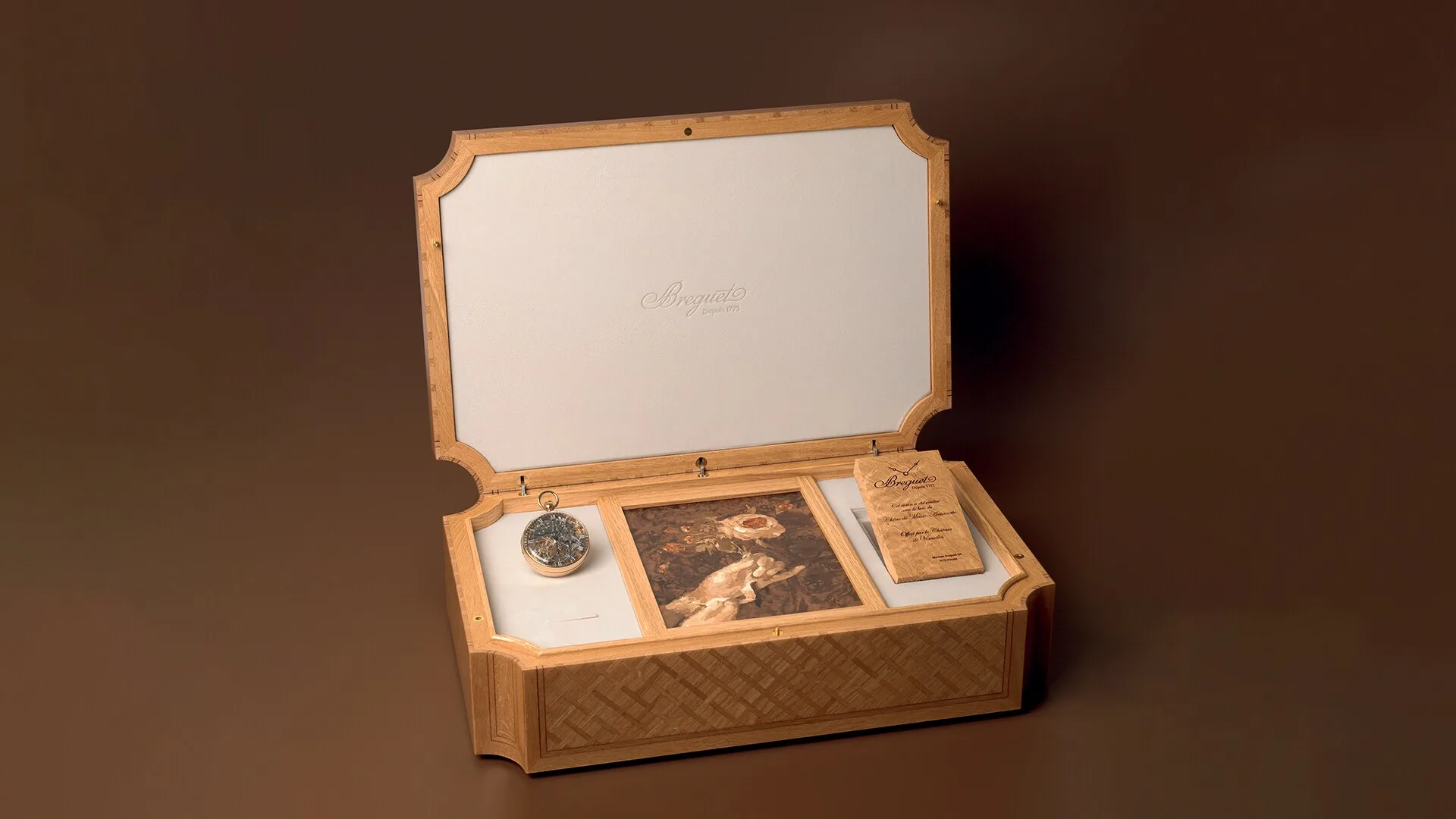
Fig. · The life of the watch on one scale, 1783–2025
ownersmuseum and exhibitiontheft and returncopy
1783 – an order with no limit on time or price. Breguet begins work.
The scale is true: every year is the same width on the bar. Move the slider – below the bar you will see what happened to the watch in that year. Where the sources are silent, it says so.
The end
In December 2024 the original travelled from Jerusalem to the Science Museum in London, to the exhibition “Versailles: Science and Splendour”, where it could be seen until 21 April 2025.4 It was shown in the section on science at the Versailles of Louis XV and Louis XVI – where it was meant to arrive more than two centuries earlier.
The watch for the queen was ordered with no time limit. It took 44 years, two generations of masters and another 23 years in the dark.
Sources
1. Emmanuel Breguet, “The Marie-Antoinette watch No. 160” – Quai de l'Horloge No. 10, Breguet. The order and the tradition about who placed it, working days 1812–1814, Breguet’s death, craftsmen and cost, complications, dials, owners, the museum, theft and return.
2. Breguet: presentation of the copy of the Marie-Antoinette watch (2008). Conditions of the order, completion in 1827, sources for the copy, 823 parts, the Versailles oak.
3. Swatch Group press release, 10 April 2008. The copy’s case and presentation in Basel, the original found as the copy was being finished, the case and its marquetry.
4. Science Museum, “Fit for a queen…”, 19 November 2024. Conditions of the order, guesses about who placed it, the chain of owners, the course of the theft, the lawyer’s call in 2006, the London exhibition.
How we checked
The main source is the article by the Breguet house historian Emmanuel Breguet; every fact was checked against the 2008 Breguet and Swatch Group releases and the Science Museum text. Where the sources disagree, we chose the more cautious version or left it out:
- the date of the theft is given differently (15, 16 or 17 April) – we write “a Saturday in April”, as [1] does;
- nobody knows who placed the order – Fersen and the guard officer are given as a guess and a tradition;
- the start of work on the copy is given as 2004 or 2005 – we give no year;
- the number of parts in the original is unknown – 823 is the copy’s count;
- the sources give different numbers of objects stolen and returned – we give no exact figure.