 No. 3 · Techno ·
A mainspring in its barrel, half wound
The source of energy
A day and a half, coiled in a barrel
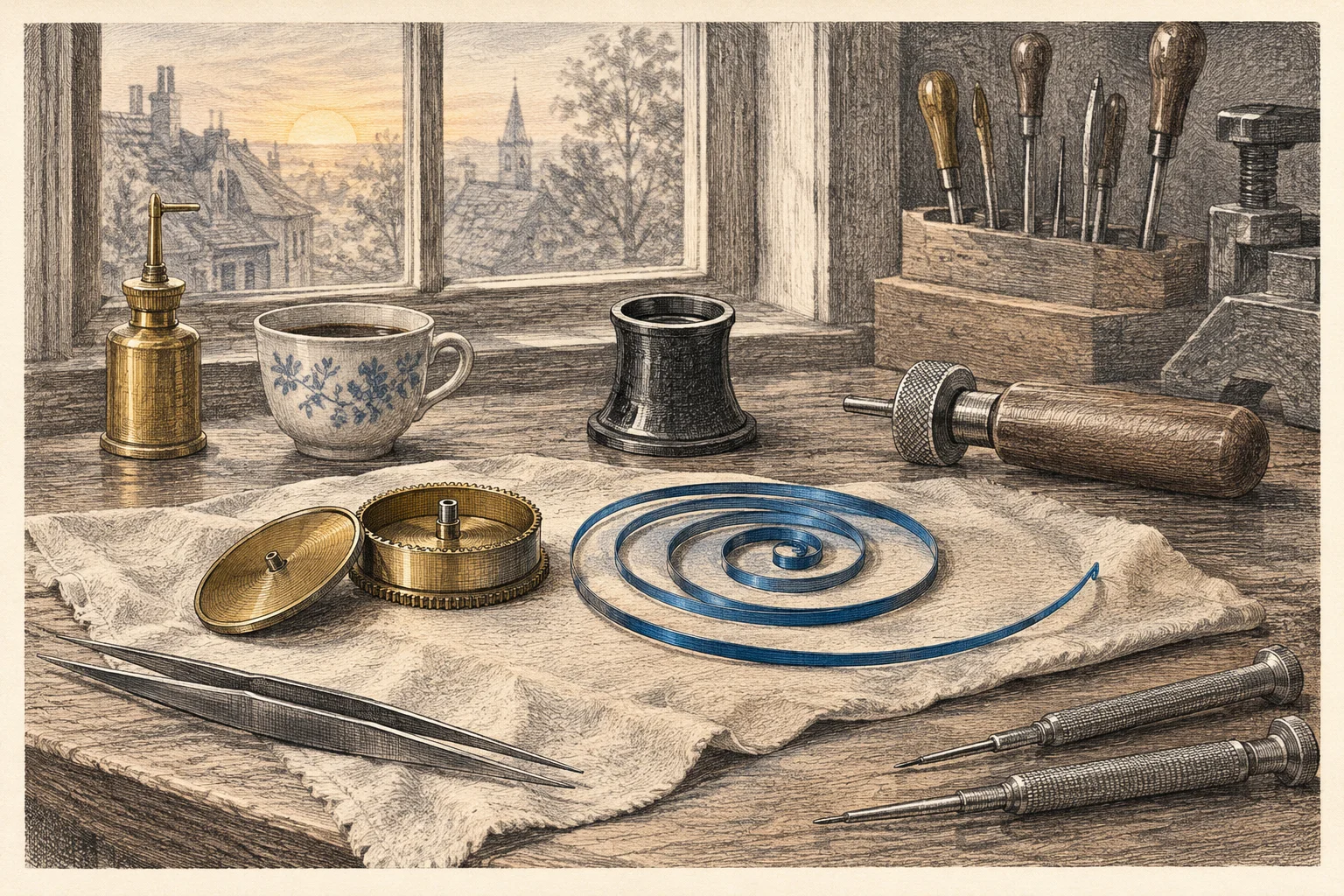
A mechanical watch has no battery. All its energy is stored in the mainspring – a strip of steel that, straightened out, would be as long as a school ruler and no more than two tenths of a millimetre thick.
The strip that drives everything
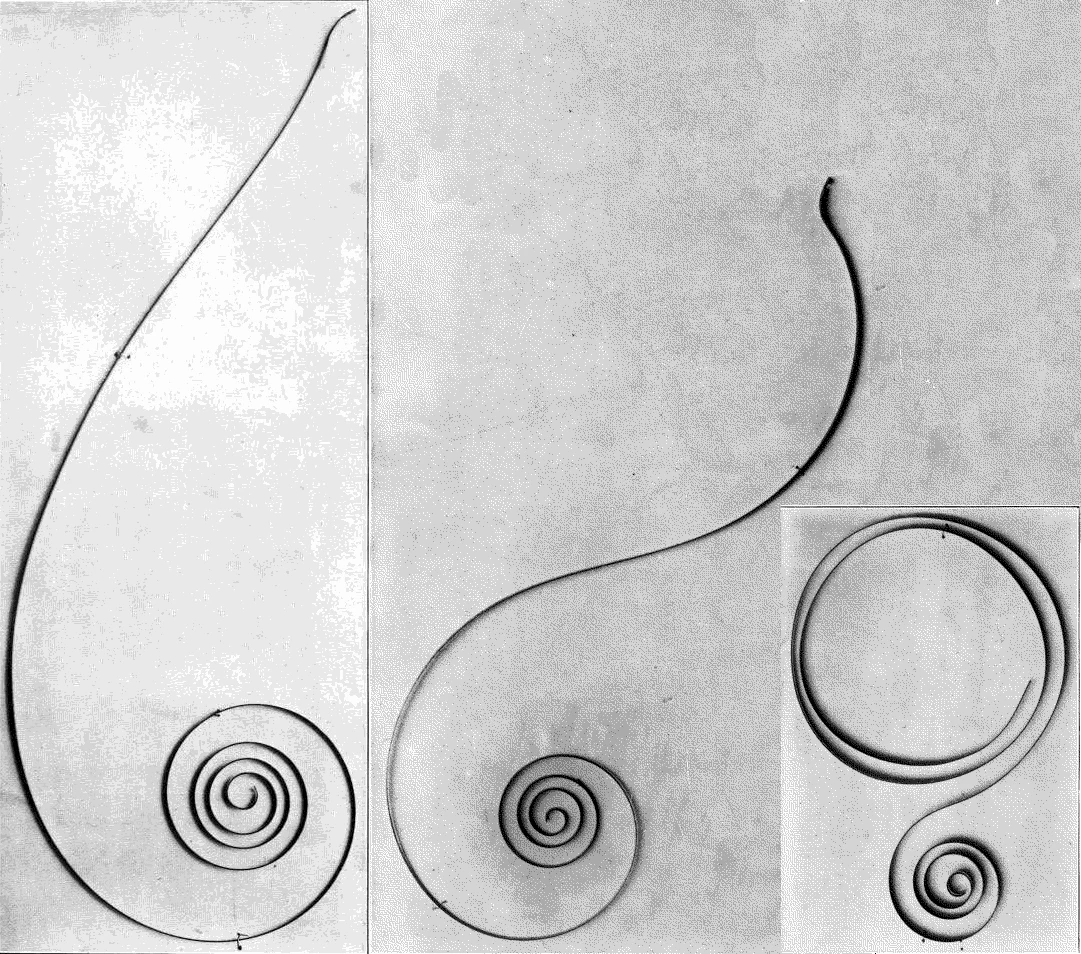
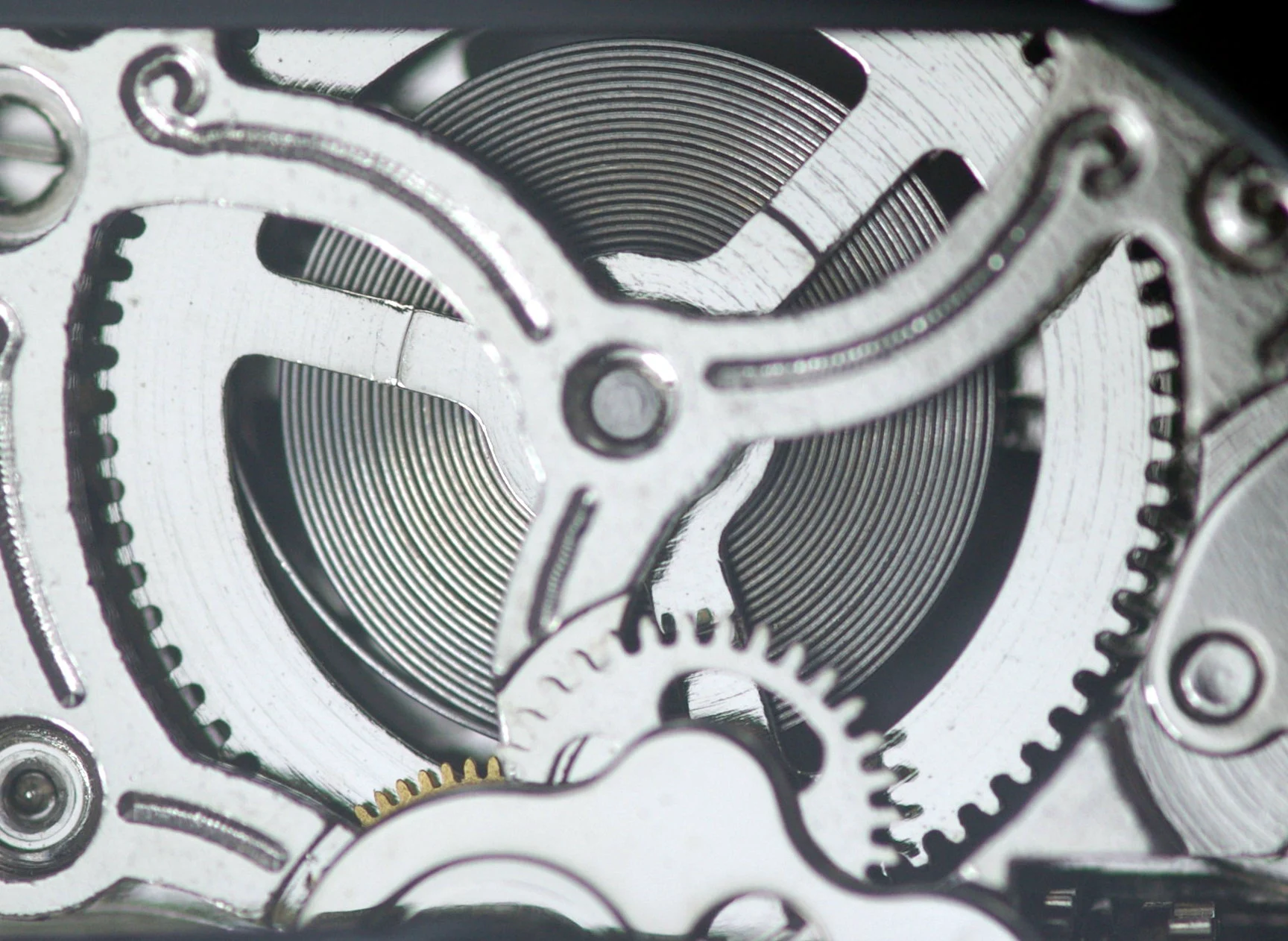
A modern watch mainspring is a strip of hardened steel or a special alloy, 20–30 cm long and 0.05–0.2 mm thick.1 It lives in the mainspring barrel – a closed drum with teeth around its rim.
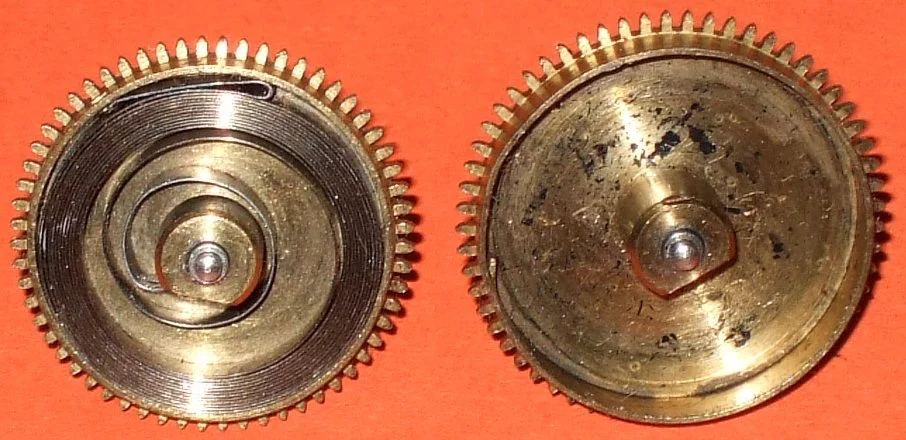
The inner end of the spring is hooked onto the barrel arbor. Winding the watch turns the arbor, and the spring wraps ever closer around it. A ratchet and click stop it turning back. Yet the watch is driven not by the arbor but by the barrel: the spring, trying to let down, turns it, and the barrel teeth turn the whole train, all the way to the lever escapement. That is why a watch keeps running even while you wind it.1
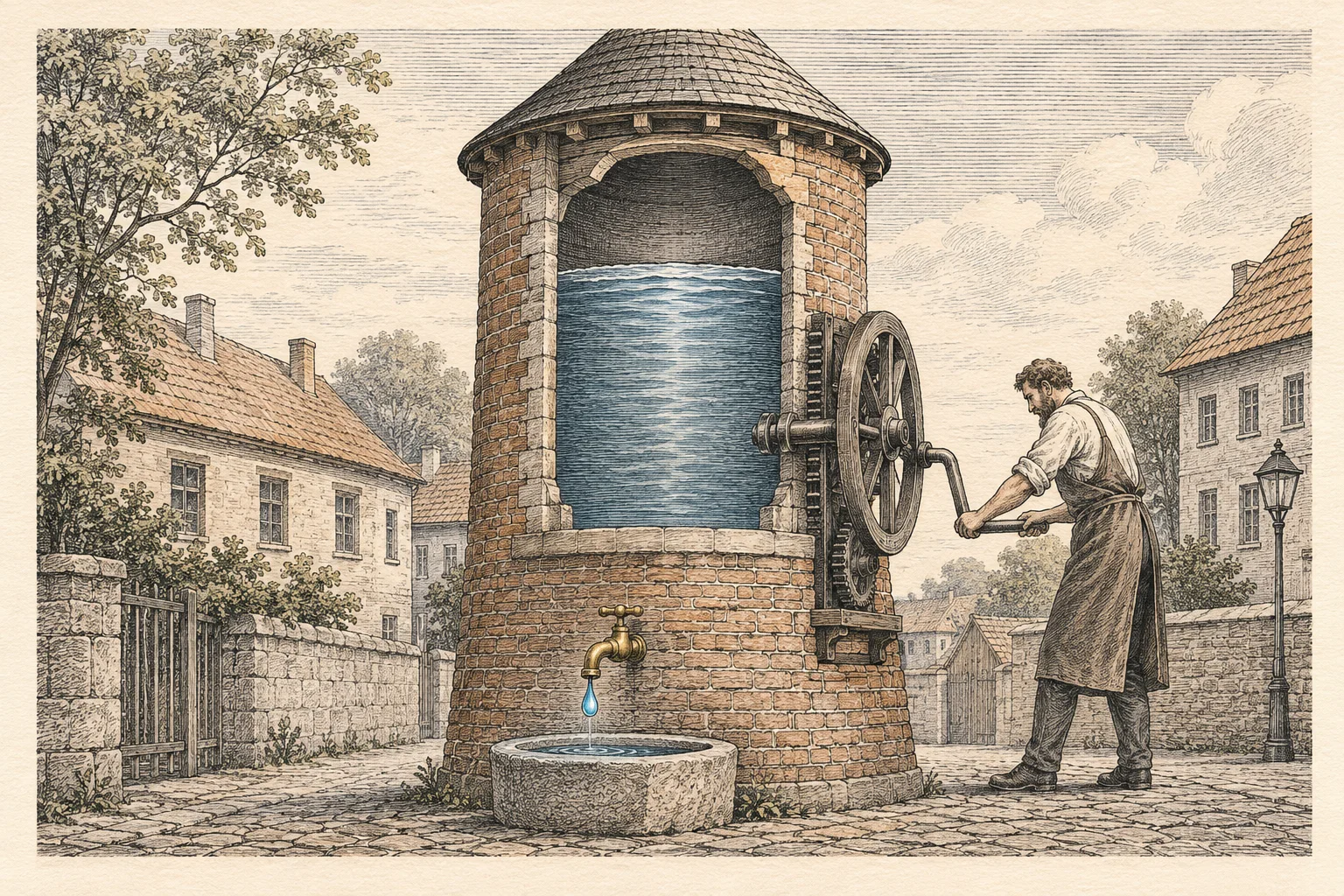
The barrel is like a water tower. Winding fills it, and the escapement lets the water out a drop at a time, eight times a second.
Why 40 hours
An ordinary movement is designed to run for 36–40 hours. The figure is no accident: a day between two windings, plus 12–16 hours of power reserve for whoever winds it late.1* Hand-wound and self-winding watches are made the same way.
- In other words, the reserve is for all of us. ↩
A strong start, a weak finish
The spring has one flaw: its force is not constant. Freshly wound, it turns the barrel hard; almost let down, it turns it weakly. And the balance, as we wrote in No. 1, lacks perfect isochronism: when the impulse changes, the rate changes a little too. Early clocks and watches lost time as their springs weakened.1
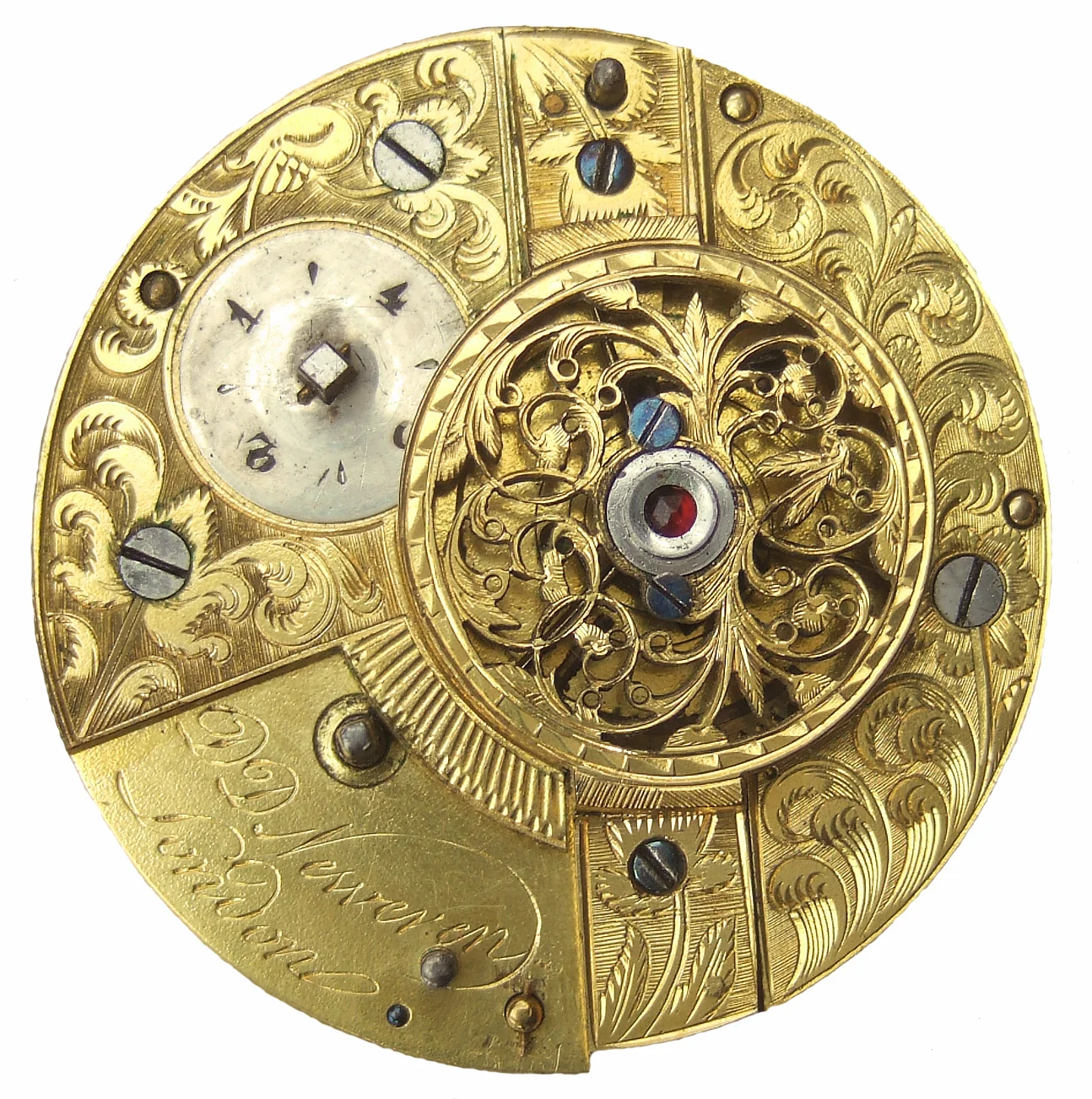
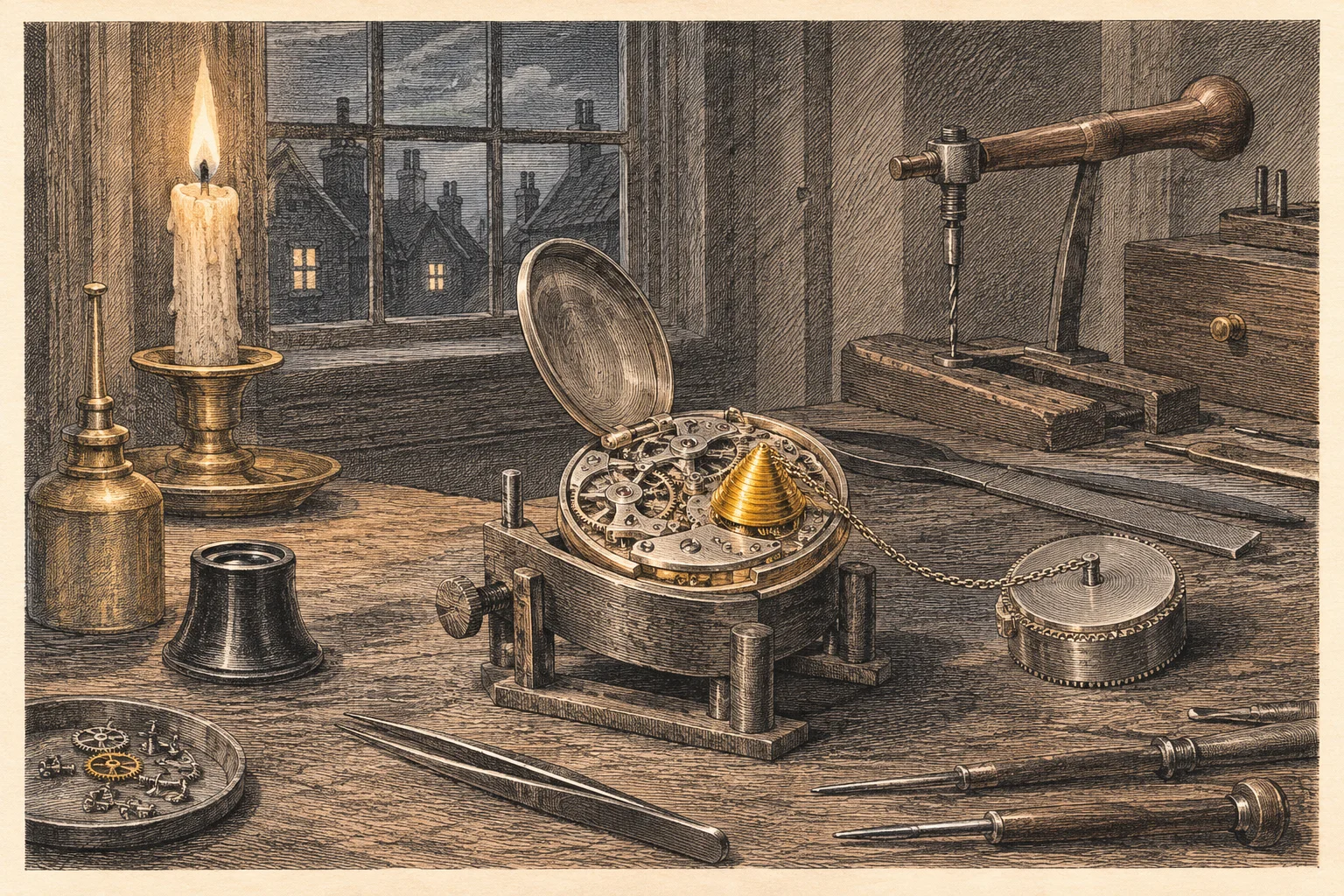
The first remedies appeared as early as the 15th century. One of them is the fusee: a cone-shaped pulley linked to the barrel by a chain. While the spring is strong, the chain pulls on the narrow end of the cone; as it weakens, on an ever wider part, and the force on the train stays almost the same. The fusee was standard until the 19th century and survived in marine chronometers until the 1970s.1
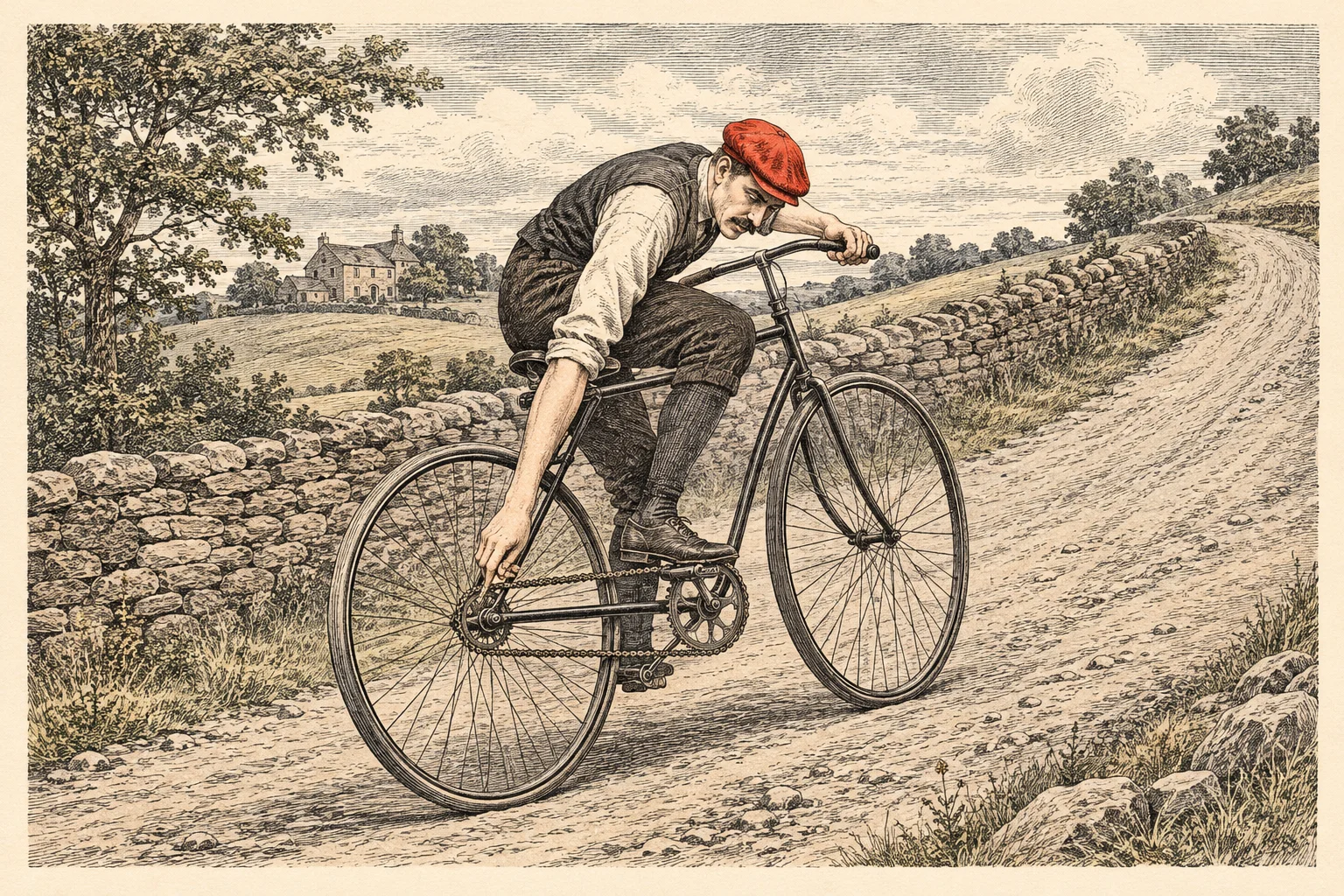
The fusee behaves like a tired cyclist on a climb: as his strength fades, he shifts to a lower gear and keeps the same pace.
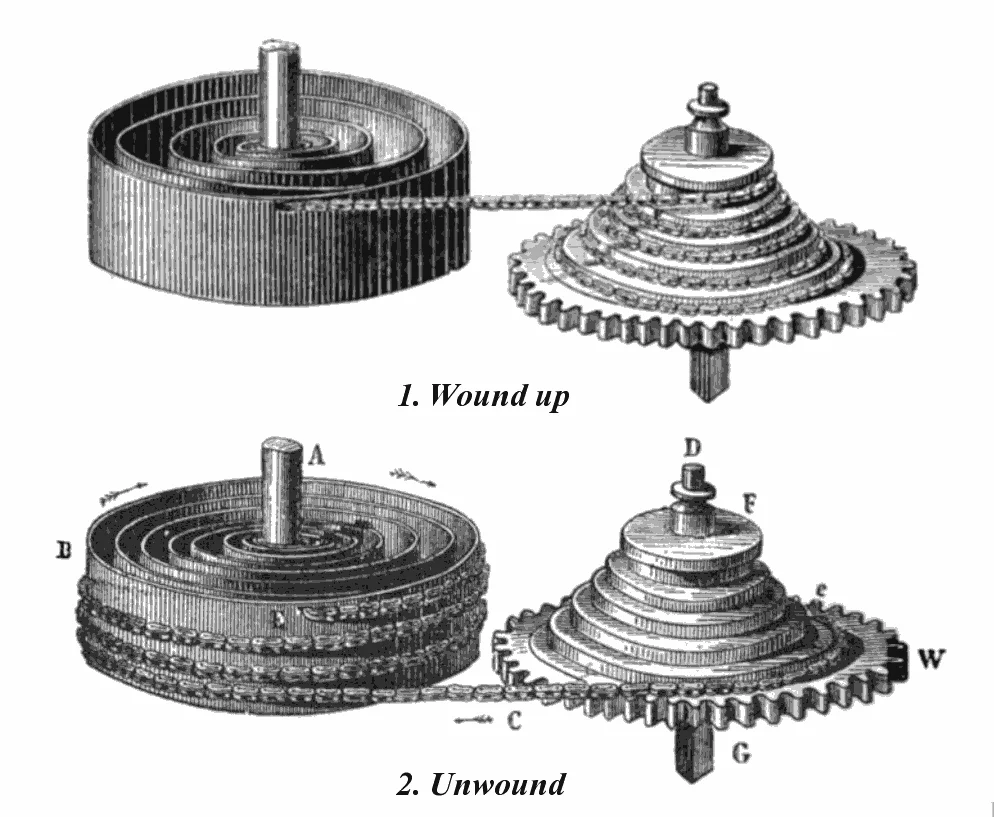
Modern watches have no fusee. In 1760 Jean-Antoine Lépine proposed the barrel we still use: the spring is made longer than needed, coiled in under tension, and only a few turns from its middle do the work. The rest stays pressed against the barrel wall. That way only the flattest part of the force curve is used.1
Thinner or thicker
The designer’s task looks simple: the barrel is already drawn, its size set by the rest of the movement. A spring has to go inside. Long and thin – or shorter and thicker?
The reserve depends on how many turns the barrel makes from full wind to standstill.3 A thinner spring is longer, has more coils and so more turns. But it is also much weaker: the torque falls with the fourth power. Try it yourself.
A thin spring is a marathon runner, a thick one a sprinter. Both have the same water bottle, but one rations it for a long road, while the other burns it in a few moments – far more powerfully.
Fig. 1 · The same space in the barrel, springs of different thickness

The radii of the barrel and of the innermost coil do not change (the innermost coil radius is a third of the barrel’s), and the spring always fills half the area between them – the theoretical optimum. Only the thickness changes, and with it the length. The ratios of reserve and stiffness follow [3]; the 72 hours are an example from the same source. Intermediate positions are simplified: a real spring does not unwind quite concentrically.
The numbers are merciless. Make the spring only a third thicker – 1/12 of the innermost coil radius instead of 1/16 – and it becomes more than three times stiffer, while only three quarters of the reserve remain: 54 hours instead of 72.3 That is why chronographs, perpetual calendars and tourbillons, which need more force, get a slightly thicker spring, even though the reserve suffers.3
Theory says the spring should take up half of the free space in the barrel. From experience, watchmakers fill up to 55 % and use a spring about 1.2 times longer than the formula gives.3 It is a correction from practice: among other things, a real spring does not unwind quite concentrically, so it makes slightly fewer turns than the formula promises.
One barrel, two, nine
If one barrel is too small, you can fit two. Linked in parallel, they turn the same wheel together: twice the force, the same reserve. This is how precision watches are made – from 19th-century Breguet pocket watches to the F.P. Journe Chronomètre Optimum.2 Linked in series, they let down one after the other: the force of one, but the running times add up. That is how the IWC 52000-family movements with their seven-day reserve work, and the extreme case is the Hublot MP-07: nine barrels and 40 days.2
Just as with horses: two harnessed side by side pull a heavier cart, while horses changed one after another at a coaching inn go further.
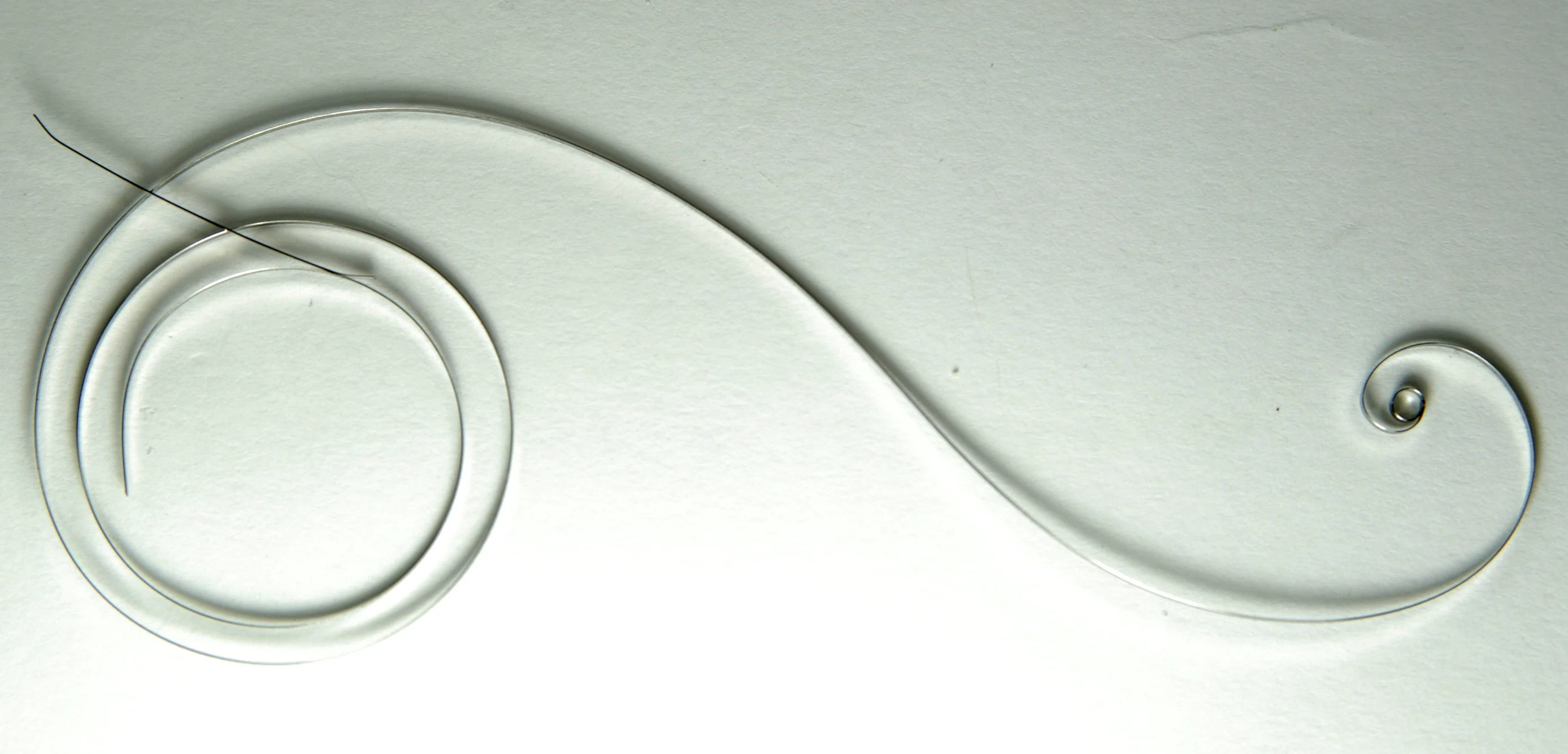
A single large barrel with a long reserve has the same problem with force: such a watch would run fast on the first day, fairly well for the next two or three, and then its rate would drop sharply.2 The A. Lange & Söhne Lange 31 (2007) runs for a month on a single barrel, but the barrel holds two springs, and energy reaches the escapement through an intermediate spring: every 10 seconds the same amount, however much is left in the mainsprings.4 It is wound not by the crown but with a separate key through the caseback.4
straightened out – each of the two Lange 31 mainsprings. An ordinary one: 20–30 cm.
How we know: the length of the springs and the 31-day (744-hour) reserve – in the Monochrome review [4]; the length of an ordinary spring – [1].
When the rotor will not stop
In a self-winding watch the rotor winds the spring, and the rotor does not know when to stop. The arm swings all day, and if the end of the spring were firmly fixed to the barrel, sooner or later it would break.1
So here the outer end is not fixed but attached to a separate springy strip that presses against the barrel wall by friction – the slipping bridle. While the spring is being wound, the strip holds. When the spring is fully wound and pulls harder, the strip slips, and the rotor goes on turning without harm.1
That is how the drag on an angler’s reel works: when the fish pulls too hard, the line runs out instead of snapping.

The overwinding myth
“I overwound my watch,” says the owner of a watch that stopped fully wound. In reality watches are designed to be wound all the way. The usual cause is dirt and dried-out oil: friction grows until the wound spring can no longer overcome it, and the watch stops sooner than it should.1
It is not the horse’s fault but the mud’s: even the strongest horse cannot move a cart sunk to its axles.
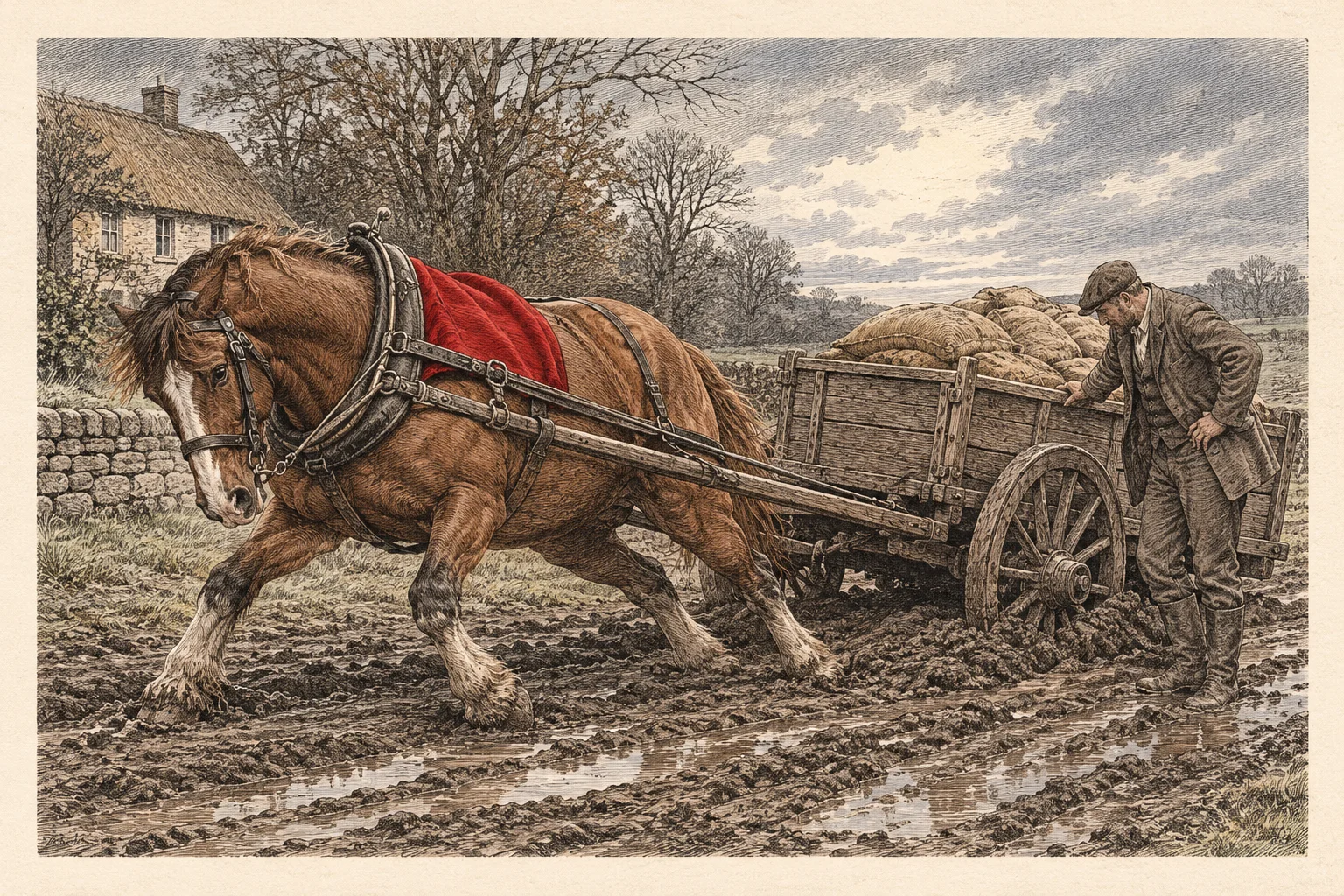
Springs really did break once. Until the 1960s metal fatigue usually finished them before any other part, and they were treated as consumables.1 From 1945 carbon steel was gradually replaced by alloys with nickel, chromium, cobalt, molybdenum or beryllium. These “white” springs do not rust, tire less and rarely break.1
The end
The mainspring is often credited to the Nuremberg master Peter Henlein, around 1511. That is not true: 15th-century sources already mention clocks “without weights”, and at least two of them survive.1 Since then everything about the spring has changed: the material, the length, the barrel, and a bridle was added. Only the principle remains – a coiled strip that wants to let go.
Sources
1. Mainspring – Wikipedia (citing De Carle, Milham and Hamilton technical notes). Dimensions, 36–40 h, how the barrel works, alloys, breakage and the overwinding myth, the fusee, Lépine’s barrel, the slipping bridle, the Henlein error.
2. “Explained: Barrels, Mainsprings, and the Trade-off Between Power Reserve and Energy” – SJX, 2024. Barrels in parallel and in series, IWC 52000, Hublot MP-07, the drop in force of a large barrel.
3. “In-Depth: Balancing Mainspring Dimensions Inside the Barrel” – SJX, 2025. Number of turns and reserve, the r/e ratio (Defossez), half the area, ratios of stiffness and reserve, 55 % and 1.2 times in practice.
4. Lange 31 review – Monochrome Watches, 29 August 2017. 31 days, two 185 cm springs, energy every 10 s, key winding, 2007.
How we checked
Main sources – [1] for history and function, [3] for geometry. We recalculated the numbers in Fig. 1 ourselves: if the spring fills half the area, its boundary lies at the same radius in both extreme positions, the number of turns grows in direct proportion to r/e, and the stiffness falls with its fourth power – the results match [3].
- the official Lange 31, IWC and Hublot pages do not answer automated requests – we took the data from [2] and [4] and give no prices or other details of the models;
- we have no barrel dimensions for specific calibres – so the figure shows proportions, not millimetres;
- 72 hours is an example from [3], not data for a particular watch.